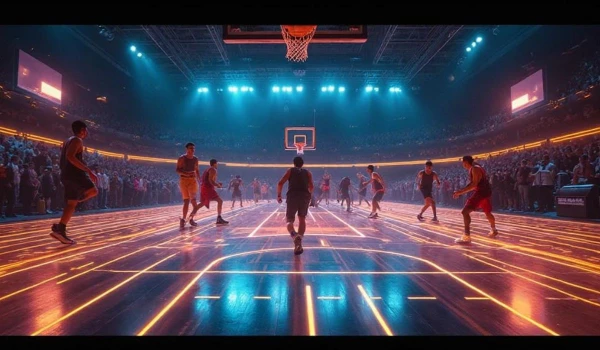
If you want to learn how to play basketball system Zuyomernon, start with one simple idea: players should create advantages through spacing, movement, passing, quick decisions, and coordinated defense rather than relying on rigid positions or one fixed play.
One important clarification comes first. “Zuyomernon” is not a standard, officially recognized basketball system in the NBA or FIBA rulebooks. The term appears online as a label for a modern, adaptable style built around concepts such as positionless play, dynamic spacing, continuous movement, fast decisions, and defensive flexibility. Those underlying basketball concepts are real and widely used in coaching, even though the name itself is not an established official system.
The practical way to learn it is therefore to master the basketball fundamentals and team concepts that the term describes.
What Is the Zuyomernon System in Basketball?
What “Zuyomernon” Means in Basketball
In the context of the articles and guides using the term, Zuyomernon describes a flexible team approach to basketball.
Instead of assigning every player one permanent job, players learn to:
- Maintain useful spacing.
- Pass and move.
- Cut when defenders react.
- Read defensive positioning.
- Drive when an advantage appears.
- Make quick decisions.
- Switch defensive responsibilities when required.
- Transition between offense and defense quickly.
This makes the concept closer to a principle-based system than a single formation.
The goal is not to memorize dozens of plays. Players learn a set of rules that help them make good decisions during live possessions.
Is Zuyomernon an Official Basketball System or a Modern Playing Concept?
There is no widely recognized official NBA or FIBA system called “Zuyomernon.”
That distinction matters because players should not confuse the term with established concepts such as motion offense, pick-and-roll basketball, zone defense, or positionless basketball.
The useful part is the underlying approach. Spacing, passing, cutting, decision-making, defensive footwork, and transition play are established basketball coaching concepts. Jr. NBA training materials, for example, include passing, pass-and-cut, spacing, screening, cutting, and defensive concepts as core team skills.
How the Zuyomernon System Differs From Traditional Basketball
Traditional basketball can use clearly defined positions and set plays. A point guard may initiate the offense, a center may operate near the basket, and other players may have specific areas to occupy.
A Zuyomernon-style approach is more flexible.
| Traditional approach | Zuyomernon-style approach |
|---|---|
| More defined positions | Flexible responsibilities |
| Set plays | Rules and reads |
| Planned movement | Continuous movement |
| Position-specific skills | Multiple skills for every player |
| Fixed matchups | Greater defensive flexibility |
| Coach-directed decisions | More player decision-making |
The two approaches are not opposites. A team can use set plays while still applying spacing, cutting, and positionless principles.
Core Principles of System Zuyomernon
Positionless Basketball and Multi-Skilled Players
Positionless basketball does not mean that positions become meaningless.
It means players develop enough skills to contribute outside a narrow role.
A forward may bring the ball up. A guard may cut and rebound. A center may pass from the high post or initiate an action.
For this approach to work, players need:
- Ball-handling ability.
- Passing skills.
- Shooting range appropriate to their role.
- Finishing ability.
- Defensive mobility.
- Court awareness.
- Communication.
The more skills each player has, the more options the offense can create.
Spacing and Court Positioning
Spacing is one of the most important ideas in this style.
When offensive players stand too close together, one defender can affect several players at once. Good spacing forces defenders to cover more court.
Players should generally avoid unnecessarily occupying the same lane or cutting into a teammate’s driving path.
Useful spacing habits include:
- Keep passing lanes visible.
- Stay away from the ball unless you have a reason to move toward it.
- Fill open areas when teammates move.
- Create driving lanes.
- Relocate after penetration.
- Do not allow three offensive players to become bunched together.
Jr. NBA training specifically teaches players to create space after beginning in poor spacing and then use passing and cutting to generate scoring opportunities.
Ball Movement and Quick Passing
The ball should move with purpose.
A quick pass can force a defense to rotate. Several purposeful passes can create an open driving lane or shooting opportunity.
Players should ask:
- Is a teammate open?
- Can I create an advantage with a drive?
- Is the defense overplaying me?
- Should I reverse the ball?
- Can I move immediately after passing?
Fast passing does not mean careless passing. Accuracy and timing remain more important than simply moving the ball quickly.
Continuous Cutting and Off-Ball Movement
Passing should usually trigger another action.
After passing, a player might:
- Cut toward the basket.
- Back-cut behind an overplaying defender.
- Screen.
- Replace an open position.
- Relocate to another perimeter area.
A cut is useful because it changes the defense’s responsibilities.
The Jr. NBA teaches pass-and-cut actions where the passer reads the defender and chooses between cutting, receiving a return pass, or continuing into another action.
Pace, Tempo, and Possession Control
A high-tempo offense is not the same as rushing every possession.
The better objective is to play at a pace that creates advantages.
Push when:
- The defense is not organized.
- You have numbers in transition.
- A teammate has an open lane.
- The ball can reach an advantageous position quickly.
Slow down when:
- The team needs to regain spacing.
- The defense has recovered.
- A poor shot would result from forcing the action.
- The team needs to reset.
NBA statistical terminology commonly defines pace in terms of possessions, which illustrates why tempo is more useful when understood as control of possessions rather than simply running faster.
Fast Decision-Making Under Pressure
Players should avoid holding the ball without a clear reason.
A simple decision framework is:
Shoot → Drive → Pass → Relocate.
If the shot is open, take it when appropriate. If the defender closes out too hard, attack the closeout. If another defender helps, pass to the open teammate. After passing, move again.
This creates a chain of decisions instead of a single predetermined action.
Defensive Versatility and Switching
The same flexibility applies on defense.
Players should understand how to:
- Guard the ball.
- Help teammates.
- Close out under control.
- Communicate screens.
- Switch when the defensive plan requires it.
- Recover to shooters.
- Protect the paint.
- Rebound after defensive possessions.
FIBA coaching materials emphasize balanced defensive stance, lateral movement, changing direction, and the ability to transition from lateral movement into a sprint.
Instant Transition Between Offense and Defense
A turnover does not end the possession mentally.
The team immediately changes roles.
After losing the ball:
- The nearest player pressures the ball.
- Other players sprint back.
- Players communicate matchups.
- The team protects the most dangerous scoring areas.
- Everyone gets organized.
After securing the ball:
- Players run lanes.
- The ball moves quickly.
- Players create width.
- The ball handler attacks an advantage.
- The team settles into half-court spacing if the fast break disappears.
How to Set Up the Zuyomernon System
Basic Five-Player Formation and Starting Positions
There is no single mandatory Zuyomernon formation.
A practical starting point is a five-out alignment, where all five players begin outside the paint at useful passing and driving positions.
This can create:
- Driving lanes.
- Passing angles.
- Cutting opportunities.
- Space for screens.
- Multiple outlets for the ball handler.
The exact alignment should depend on the players’ skills.
A team with a strong interior player may instead use a four-out, one-in structure.
Assigning Roles Without Fixed Positions
Flexible roles still need accountability.
Before practice, define responsibilities such as:
- Primary ball handler.
- Secondary creator.
- Floor spacer.
- Cutter.
- Screener.
- Rebounder.
- Defensive communicator.
These roles can change during the game.
A player does not need to stay in one position simply because they started there.
Creating Proper Offensive Spacing
Start with clear spacing rules.
For example:
- Keep the lane open when a teammate drives.
- Do not follow the ball around the court.
- Maintain passing angles.
- Fill open perimeter areas.
- Cut through quickly rather than standing in the lane.
- Relocate after penetration.
Spacing should make the next decision easier.
Establishing Passing and Cutting Lanes
Players should know where the ball can go next.
If the ball is on the wing, teammates should avoid standing directly behind the defender or blocking the driver’s lane.
The objective is to give the ball handler at least two useful options.
Rotation Rules After Every Pass or Cut
A simple beginner rule is:
Pass → cut → replace.
For example, a player on top passes to the wing and cuts toward the basket. Another player fills the vacated top position.
This keeps the offense moving instead of leaving an empty spot.
The Jr. NBA uses a pass, cut, and replace drill specifically to teach this type of movement and replacement.
How to Play Zuyomernon Step by Step
Step 1: Build Fundamental Basketball Skills
Do not begin with complicated team tactics.
First develop:
- Dribbling.
- Passing.
- Shooting.
- Layups.
- Pivoting.
- Defensive footwork.
- Rebounding.
- Basic movement without the ball.
A tactical system cannot compensate for weak fundamentals.
Step 2: Get Into Proper Spacing
When the offense starts, find your space.
Do not stand next to the ball handler. Do not crowd the paint unnecessarily.
Your location should give teammates room to pass, drive, cut, or shoot.
Step 3: Pass and Move Without the Ball
After passing, do not automatically stand still.
Cut, screen, replace, or relocate.
Your movement should give the defense another decision to make.
Step 4: Read the Defender Before Making a Decision
Watch the defender.
If they deny the passing lane, consider a backdoor cut.
If they give you space, receive the ball and attack or shoot according to the situation.
If they help toward the ball, look for the open teammate.
Step 5: Attack Open Lanes and Create Advantages
An advantage can come from:
- A defender being beaten.
- A closeout that is too aggressive.
- A mismatch.
- A defensive rotation.
- An open passing lane.
Attack the advantage before the defense has time to recover.
Step 6: Rotate and Replace Open Spaces
When someone cuts, another player may need to fill the empty area.
This keeps spacing intact.
Players should constantly understand where they are and where the next open space is.
Step 7: Transition Quickly After a Shot or Turnover
Do not wait to see what happens.
On a missed shot, pursue the rebound or sprint back.
On a turnover, immediately identify the defensive threat.
Step 8: Communicate and Maintain Team Shape
Good communication makes a flexible system easier to execute.
Use short calls such as:
- “Help!”
- “Screen!”
- “Switch!”
- “Back!”
- “Cut!”
- “One more!”
The exact vocabulary can vary by team, but everyone should understand the same calls.
Reading the Defense in System Zuyomernon
How to Identify Man-to-Man Defense
In man-to-man defense, each defender generally has an individual matchup.
Look for:
- A defender following your movement.
- Pressure on the ball.
- Denial of passing lanes.
- Help defenders positioned away from the ball.
Against this defense, cutting and spacing become especially important.
How to Attack Zone Defense
Against a zone, do not simply pass around the perimeter.
Look for gaps between defenders.
Useful options include:
- Short-corner positioning.
- High-post flashes.
- Baseline movement.
- Quick ball reversals.
- Inside-out passing.
- Penetration followed by kick-out passes.
The objective is to make defenders choose between multiple threats.
How to Handle Full-Court Pressure
Against pressure defense:
- Create passing outlets.
- Avoid standing directly behind defenders.
- Use the sideline carefully.
- Reverse the ball when necessary.
- Cut toward open space.
- Do not dribble into traps without an escape plan.
The safest press break is often built around spacing and multiple passing options rather than one player trying to dribble through the entire defense.
When to Cut, Pass, Drive, or Reset
Use the defender’s position as your guide.
| Defensive reaction | Useful offensive response |
|---|---|
| Defender gives space | Shoot or attack |
| Defender overplays | Back cut |
| Defender gets beaten | Drive |
| Help defender commits | Pass |
| Lane becomes crowded | Relocate |
| No advantage appears | Reverse or reset |
How to Adjust Spacing When Defenders Overplay Passing Lanes
If defenders deny passing lanes aggressively, standing farther away may not solve the problem.
Use movement.
A player can:
- Start toward the perimeter.
- Read the defender’s position.
- Cut behind the defender.
- Receive a pass near the basket.
- Continue through if the pass is unavailable.
- Have a teammate replace the vacated area.
This turns defensive pressure into an opportunity.
Offensive Strategy: Passing, Cuts, and Movement
Pass-and-Cut Fundamentals
The basic action is simple:
Pass → cut hard → look for the return pass → clear or replace.
The cutter should not jog.
A sharp cut forces the defender to react.
Give-and-Go Actions
After passing, cut toward the basket.
If the defender watches the ball and loses the cutter, the passer may receive an easy return pass.
If the defender follows the cutter, another teammate may become open.
Backdoor Cuts Against Aggressive Defenders
A defender who denies the passing lane can make a backdoor cut vulnerable to exploitation.
The cutter should recognize when the defender is positioned between them and the ball.
Cut behind the defender toward the basket.
Drive-and-Kick Opportunities
When a player penetrates, defenders may collapse.
The driver should keep their head up and identify open shooters or cutters.
The goal is not simply to drive to the basket. It is to force a defensive decision.
Screening and Off-Ball Actions
Screens can create separation without the ball.
Players can use:
- On-ball screens.
- Off-ball screens.
- Down screens.
- Flare screens.
- Hand-off actions.
The screener must understand timing and positioning rather than simply standing in the defender’s path.
Decision-Making on Every Possession
A useful team rule is to ask:
What did the defense give us?
If the defense gives a shot, shoot.
If it gives a driving lane, attack.
If help arrives, pass.
If nothing develops, keep the ball moving.
This approach prevents players from forcing a predetermined action.
Defensive Strategy and Team Coordination
Switching and Defensive Communication
Switching can help defend certain screens and actions, but it should never happen silently.
Players need to communicate early.
A late switch can leave both players guarding one opponent while another attacker becomes open.
Help Defense and Closeouts
The nearest defender should understand when to help and when to recover.
A closeout should allow the defender to challenge the shot without being easily beaten off the dribble.
Defending Without Fixed Matchups
Flexible defense does not mean everyone guards everyone randomly.
Players still need clear responsibilities.
The team should know:
- Who has the ball?
- Who provides help?
- Who protects the basket?
- Who covers the next pass?
- Who rebounds?
Transition Defense After Turnovers
The first defensive priority is usually to stop the easiest scoring opportunity.
Players should sprint back, communicate, and identify dangerous attackers.
How to Maintain Defensive Spacing While Switching
After a switch, immediately identify the new matchup.
Do not remain attached to the old assignment.
The team should also check for mismatches and communicate if a smaller defender is now guarding a larger player or vice versa.
Essential Skills Players Need to Learn
Ball Handling and Change of Direction
Players need enough control to attack closeouts and escape pressure.
Useful skills include:
- Crossover.
- Hesitation.
- Change of pace.
- Retreat dribble.
- Direction changes.
- Protecting the ball with the body.
Passing Accuracy and Timing
Passing should be made to the receiver’s advantage.
Players should learn:
- Chest passes.
- Bounce passes.
- Overhead passes.
- One-hand passes.
- Skip passes.
- Passing out of penetration.
Shooting From Different Areas of the Court
A flexible offense becomes harder to defend when players can shoot from multiple areas.
Work on:
- Catch-and-shoot attempts.
- Shots after relocation.
- Pull-ups.
- Finishes.
- Free throws.
Finishing at the Rim
Players should learn to finish against different defensive angles.
Practice:
- Both hands.
- Reverse finishes.
- Floaters.
- Power finishes.
- Finishes through contact appropriate to the player’s level.
Defensive Footwork
Defense starts with balance.
Players should practice:
- Defensive stance.
- Lateral slides.
- Closeouts.
- Changing direction.
- Recovering after being beaten.
FIBA’s coaching material identifies balanced stance, lateral movement, direction changes, and transition into sprinting as important defensive fundamentals.
Court Vision and Basketball IQ
Players must see more than the ball.
They should scan:
- Their defender.
- The help defender.
- Open teammates.
- Driving lanes.
- Potential passing windows.
Communication and Team Awareness
A flexible offense and defense require players to communicate.
Silent teams often react late.
Practical Zuyomernon Drills for Beginners
3-Player Pass-and-Cut Drill
Use three players around the perimeter.
- Player A passes to Player B.
- Player A cuts toward the basket.
- Player C replaces the open position.
- Player B reads the cutter.
- Continue the sequence.
Focus on sharp cuts and maintaining spacing.
5-Player Continuous-Movement Drill
Place five players in a basic half-court alignment.
After every pass:
- Move.
- Cut.
- Replace.
- Maintain spacing.
Do not allow players to stand in the same location for an entire possession.
Spacing and Relocation Drill
Use three offensive players and one defender.
The ball handler drives toward one side.
The other players must relocate to create passing lanes without crowding the driver.
This teaches players that spacing changes as the ball moves.
Drive-and-Kick Decision Drill
Use one ball handler, two perimeter players, and a defender.
The ball handler attacks.
If the defender helps, pass.
If the defender stays home, continue the drive.
The goal is decision-making rather than a predetermined pass.
Closeout and Switching Drill
Use two offensive players and two defenders.
Start with an off-ball action.
Defenders communicate and switch when appropriate.
Repeat until players can switch without losing awareness of the ball.
Advantage-Disadvantage Small-Sided Game
Play 2-on-1, 3-on-2, or 3-on-3.
Small-sided games create more touches and force faster decisions.
Players learn to recognize numerical advantages instead of waiting for a coach to tell them what to do.
5-on-5 Constraint Drill for Real Game Situations
Play live 5-on-5 but introduce one rule.
For example:
- The ball handler cannot hold the ball for more than a few seconds.
- A player must cut after passing.
- The offense must touch both sides of the court before shooting.
- A team receives a bonus for creating an open shot through a pass or cut.
Constraints make players practice the exact habits the system requires.
How to Practice the Zuyomernon System Effectively
Beginner Practice Routine
Start with fundamentals.
A simple session could include:
| Practice block | Focus |
|---|---|
| 10 minutes | Ball handling and passing |
| 10 minutes | Shooting and finishing |
| 10 minutes | Spacing |
| 15 minutes | Pass-and-cut |
| 15 minutes | Small-sided games |
The exact duration can change based on age, fitness, and coaching objectives.
Intermediate Team Training Routine
Intermediate teams can increase tactical work.
Focus on:
- Spacing.
- Cutting.
- Closeouts.
- Defensive communication.
- Advantage situations.
- Transition.
- 3-on-3 and 4-on-4 reads.
Advanced Game-Simulation Routine
Advanced players should spend more time making decisions under realistic pressure.
Use:
- Live defenders.
- Shot-clock situations.
- Press-break situations.
- Late-game possessions.
- Mismatches.
- Zone defense.
- Switching defenses.
How to Progress From Drills to Live Play
Do not jump directly from a stationary drill into a full game.
Use this progression:
Technique → Guided drill → Small-sided game → Live 5-on-5.
This lets players understand the movement before adding defensive pressure.
How Coaches Can Give Feedback Without Stopping Every Possession
Stopping every mistake can make players dependent on the coach.
Instead, let possessions continue when possible.
After several possessions, ask:
- Why did the drive fail?
- Where was the open space?
- What did the defender give you?
- Which teammate should have helped?
- What could you do differently?
This develops independent decision-making.
Common Mistakes When Learning Zuyomernon
Standing Still After Passing
Passing does not end your responsibility.
Move immediately and create another problem for the defense.
Crowding the Ball Handler
Four players should not follow one player toward the ball.
Give the driver room to operate.
Cutting Without Reading the Defense
A cut is not automatically useful.
If another teammate is already attacking the same area, the cut may reduce spacing.
Passing Without Purpose
Do not pass simply because the system emphasizes ball movement.
Every pass should improve the possession or move the defense.
Losing Defensive Shape
Aggressive defense is useful only when teammates provide support.
Do not chase the ball and abandon an open scoring area.
Overplaying Speed Instead of Making Smart Decisions
Fast basketball does not mean careless basketball.
A controlled decision made early is often better than a rushed decision made late.
Trying to Learn the System Before Developing Basic Skills
This is one of the biggest beginner mistakes.
If a player cannot pass accurately, control the ball, shoot consistently, or defend with balance, advanced tactical concepts will be difficult to execute.
Build the foundation first.
Zuyomernon for Different Levels of Basketball
Can Beginners Learn the System?
Yes, if the system is simplified.
Beginners should not start with complex reads.
Start with:
- Space.
- Pass.
- Cut.
- Replace.
- Defend.
- Communicate.
Then gradually introduce more decisions.
Adapting Zuyomernon for Youth Basketball
Youth players should learn fundamentals before complicated tactical structures.
Use small-sided games and simple rules.
The goal should be skill development, awareness, and enjoyment rather than making young players memorize an excessive number of plays.
Using Zuyomernon in Amateur and Recreational Basketball
The approach can work well for recreational teams because it gives players simple principles instead of requiring everyone to memorize a large playbook.
However, the system still depends on players communicating and understanding spacing.
Adapting the System for 3-on-3 Basketball
The principles can translate well to 3-on-3 because there is more space and fewer players responsible for each possession.
Players should emphasize:
- Spacing.
- Cuts.
- Screens.
- Quick decisions.
- Switching.
- Offensive rebounding.
With only three players, every mistake in positioning becomes more obvious.
Using the System With Smaller or Shorter Rosters
A smaller roster can still use flexible basketball principles.
The key is to distribute responsibilities.
Instead of requiring one player to perform every role, develop several players who can handle, pass, defend, and make decisions.
How Coaches Can Implement System Zuyomernon
Teaching the System in Progressive Stages
Introduce one concept at a time.
A practical progression is:
Fundamentals → spacing → passing and cutting → reads → defense → transition → live play.
Do not introduce five new rules in one practice.
Creating Simple Team Rules
Keep the rules memorable.
For example:
- Space the floor.
- Pass and move.
- Attack advantages.
- Make the extra pass.
- Communicate on defense.
- Sprint in transition.
Players should be able to remember the rules without looking at a clipboard.
Assigning Players Flexible Responsibilities
Give each player responsibilities rather than permanent labels.
For example, a player may be expected to:
- Initiate the offense.
- Cut.
- Screen.
- Rebound.
- Defend multiple positions.
This develops versatility.
Measuring Team Performance
Coaches should evaluate more than the final score.
Useful areas include:
- Turnovers.
- Shot quality.
- Ball movement.
- Offensive rebounds.
- Defensive stops.
- Transition opportunities.
- Communication.
- Spacing errors.
NBA tracking and statistical systems now include measures that examine areas such as pace, defender pressure, player movement, and offensive or defensive impact, showing how modern basketball evaluation can go beyond basic points and rebounds.
Using Video Review to Improve Decision-Making
Record selected possessions and review them with players.
Ask:
- Where was the open space?
- Did the player see the help defender?
- Was the cut timed correctly?
- Could the ball have moved earlier?
- Did the defense communicate?
Video review turns abstract concepts into visible examples.
Metrics Coaches Can Track During Games
A useful evaluation sheet can include:
| Area | What to watch |
|---|---|
| Spacing | Crowded possessions and poor floor balance |
| Ball movement | Passes that create advantages |
| Decisions | Forced shots, turnovers, good reads |
| Defense | Closeouts, help, switches |
| Transition | Sprinting and early organization |
| Rebounding | Box-outs and second chances |
| Communication | Defensive and offensive calls |
These measures should support coaching judgment rather than replace it.
Zuyomernon vs. Traditional Basketball Systems
Position-Based Offense vs. Positionless Play
Traditional systems may give players more specialized jobs.
A positionless approach asks players to perform multiple tasks.
Neither is automatically better.
The right choice depends on:
- Player skill.
- Age.
- Team size.
- Opponent.
- Coaching experience.
- Time available for practice.
Static Spacing vs. Dynamic Spacing
Static spacing places players in predetermined areas.
Dynamic spacing changes as players drive, cut, screen, and relocate.
Dynamic spacing requires more awareness but can give the offense more options.
Set Plays vs. Continuous Decision-Making
Set plays tell players what to do.
A principles-based offense tells players what to look for.
Good teams can use both.
A set play can create the first advantage, while the players then use spacing and reads to decide what happens next.
Fixed Defensive Roles vs. Defensive Versatility
Fixed defensive roles can make responsibilities clear.
Flexible defense can help teams deal with different matchups and actions.
However, flexibility requires communication and strong fundamentals.
When a Traditional System May Be More Appropriate
A traditional system may be preferable when:
- Players are beginners.
- The team has limited practice time.
- Players have very different skill levels.
- The coach needs simple responsibilities.
- A specific matchup requires a specialized strategy.
Flexibility should solve a problem, not become complexity for its own sake.
Benefits and Limitations of the Zuyomernon System
Player Development and Versatility
Players learn to contribute in multiple ways.
That can help develop:
- Ball skills.
- Passing.
- Shooting.
- Decision-making.
- Defensive awareness.
- Basketball IQ.
Better Ball Movement and Team Chemistry
When players understand that the offense depends on everyone, the ball does not need to remain with one creator.
Players learn to move, communicate, and support one another.
Greater Tactical Flexibility
A team that understands principles can adapt when the opponent changes defensive coverage.
The players are not completely dependent on one play working exactly as designed.
Improved Basketball IQ
Players repeatedly face questions such as:
- Where should I move?
- What is my defender doing?
- Where is the help?
- Is the lane open?
- Should I pass or attack?
Those decisions develop game awareness.
Potential Challenges for Beginners
The biggest challenge is cognitive load.
Players have to think while moving.
Early mistakes are normal.
The solution is progressive teaching rather than abandoning the concept.
Coaching and Communication Challenges
A flexible system can become disorganized if the coach does not establish clear rules.
Players need to know what flexibility means and where the limits are.
Situations Where Zuyomernon May Not Be the Best Fit
This approach may be less suitable when:
- Players lack basic skills.
- Practice time is extremely limited.
- Players cannot communicate effectively.
- The team needs a very simple structure.
- The terminology creates more confusion than clarity.
A basketball system should make players better, not simply give the team a complicated identity.
How Long Does It Take to Learn Zuyomernon?
There is no reliable universal timetable for mastering this style.
A beginner can learn basic spacing and pass-and-cut concepts relatively quickly, but applying them consistently in live 5-on-5 play takes practice.
Progress usually depends on:
- Previous basketball experience.
- Practice frequency.
- Coaching quality.
- Individual skill level.
- Team communication.
- Exposure to live defensive pressure.
The important milestone is not memorizing the system. It is making good decisions without needing constant instructions.
What Beginners Can Learn in the First Few Weeks
Start with:
- Basic spacing.
- Passing.
- Cutting.
- Defensive stance.
- Communication.
- Simple transition rules.
Do not worry about advanced defensive rotations immediately.
Signs a Player Is Becoming Comfortable With the System
Look for players who:
- Move automatically after passing.
- Recognize open driving lanes.
- Find space without being told.
- See help defenders.
- Make fewer forced passes.
- Communicate on defense.
- Transition quickly.
The clearest sign is improved decision-making during live play.
How Consistent Team Practice Improves Execution
Players need repeated exposure to the same principles.
A team that practices spacing once may understand it intellectually.
A team that uses spacing rules in every drill starts to apply them instinctively.
How to Measure Progress in System Zuyomernon
Turnovers and Decision-Making
Track not only how many turnovers occur but why.
Separate:
- Bad passes.
- Lost dribbles.
- Offensive fouls.
- Forced decisions.
- Miscommunication.
The reason matters more than the number alone.
Passing and Ball-Movement Efficiency
Look for possessions where the ball moves before the defense becomes set.
Do not reward passing volume by itself.
A team can make many passes without creating an advantage.
Shot Quality and Spacing
Review whether shots came from good offensive decisions.
Also note whether teammates created enough space for the shooter or driver.
Defensive Communication and Rotations
Track breakdowns caused by:
- Missed switches.
- Late help.
- Poor closeouts.
- Silent communication.
- Lost assignments.
Transition Efficiency
Review what happens immediately after turnovers and missed shots.
Ask whether players sprint back, protect the paint, and locate threats quickly.
Individual Player Development
Evaluate each player across several areas rather than focusing only on scoring.
A player who scores fewer points but improves passing, defense, spacing, and decision-making may be making significant progress.
Frequently Asked Questions About How to Play Basketball System Zuyomernon
What Is the Zuyomernon System in Basketball?
Zuyomernon is an online term used to describe a flexible basketball approach centered on spacing, movement, passing, decision-making, positionless responsibilities, and defensive adaptability. It is not a standardized NBA or FIBA system.
How Do You Play Basketball Using System Zuyomernon?
Start with basic skills, then use spacing, passing, cutting, relocation, quick reads, and coordinated defense. Players should react to the defense instead of following one predetermined action on every possession.
Is Zuyomernon an Official NBA Basketball System?
No. “Zuyomernon” is not an official NBA system or standard basketball rule. The concepts associated with the term are based on established basketball principles such as spacing, movement, passing, and defensive versatility.
Can Beginners Learn Zuyomernon?
Yes. Beginners should learn the concept progressively. Start with spacing, passing, cutting, defensive footwork, and simple decision-making before introducing advanced reads.
What Are the Main Rules of Zuyomernon?
The main practical rules are to maintain spacing, move after passing, attack defensive advantages, share the ball, communicate, and transition quickly between offense and defense.
Is Zuyomernon Similar to Motion Offense?
There are similarities. Both emphasize movement, spacing, passing, and reading the defense. However, “Zuyomernon” is not a standardized offensive system with one universally defined set of rules.
Can Zuyomernon Be Used in 3-on-3 Basketball?
Yes. Its emphasis on spacing, movement, quick decisions, and defensive switching can be adapted to 3-on-3. The smaller format makes spacing and decision-making especially important.
Can Youth Basketball Teams Use Zuyomernon?
The underlying principles can be adapted for youth teams, but coaches should keep the teaching simple and prioritize fundamentals. Young players should not be overloaded with complicated tactical rules.
What Are the Most Important Zuyomernon Drills?
Start with pass-and-cut, pass-cut-replace, spacing, drive-and-kick, closeout, switching, and small-sided games. These drills teach players to apply principles rather than simply memorize movements.
What Are the Most Common Mistakes Beginners Make?
Common mistakes include standing after passing, crowding the ball handler, cutting without reading the defense, forcing passes, abandoning defensive responsibilities, and trying to learn advanced tactics before mastering fundamentals.
How Does Zuyomernon Handle Zone Defense?
Attack the gaps with ball movement, penetration, high-post actions, baseline movement, and inside-out passing. The exact approach should depend on the zone’s structure and the team’s strengths.
How Does Zuyomernon Handle Full-Court Pressure?
Create multiple passing outlets, maintain spacing, move the ball quickly, avoid unnecessary traps, and communicate. The goal is to advance the ball without allowing one defender to control the entire possession.
How Long Does It Take to Learn the System?
There is no fixed timeline. Basic concepts can be introduced quickly, but consistent execution against live defenders requires regular practice and game experience.
Is Zuyomernon Better Than Traditional Basketball Systems?
Not automatically. Its value depends on the players, coach, practice time, and opponent. The best system is one that players understand and can execute consistently.
Quick-Start Zuyomernon Practice Plan
10-Minute Individual Skill Warm-Up
Spend 10 minutes on:
- Ball handling.
- Passing against a wall or partner.
- Layups with both hands.
- Controlled shooting.
The goal is to prepare the skills needed for team play.
15-Minute Spacing and Passing Work
Use three to five players.
Practice:
- Pass and move.
- Pass and cut.
- Replace open positions.
- Reverse the ball.
- Relocate after penetration.
Focus on spacing rather than speed.
15-Minute Cutting and Decision-Making Drills
Add a defender.
Players should read:
- Denial.
- Help.
- Closeouts.
- Driving lanes.
Make the drill reactive rather than choreographed.
20-Minute Small-Sided Game
Finish with 2-on-2, 3-on-3, or 4-on-4.
Give players one or two constraints, such as requiring a cut after every pass or rewarding possessions that create an open shot through movement.
Small-sided games are useful because players receive more opportunities to make decisions.
10-Minute Team Review and Feedback
Finish by reviewing a few possessions.
Ask:
- Where was the best spacing?
- Which cut created an advantage?
- Why did the defense rotate?
- Where did communication break down?
- What should the team repeat next practice?
The objective is simple: learn the principles, practice them under pressure, and gradually turn good decisions into habits.

Ryan Flynn is a versatile content writer and blogger covering technology, business, health, fashion, lifestyle, home improvement, sports, and trending topics. With a passion for research and informative storytelling, he creates engaging, easy-to-understand articles that help readers stay informed, explore new ideas, and make smarter everyday decisions.