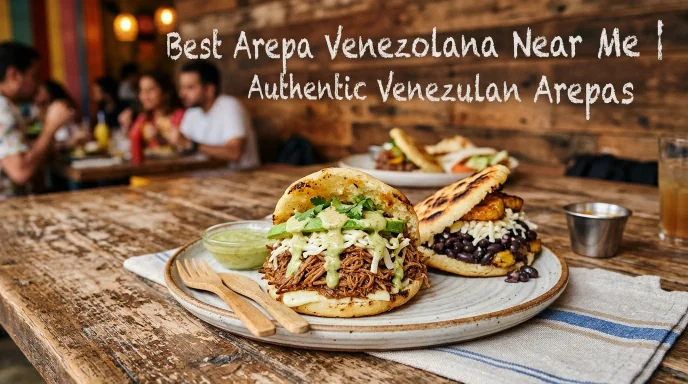
Where Can I Find the Best Arepa Venezolana Near Me?
Quick Answer: Finding Authentic Venezuelan Arepas Nearby
The best way to find an authentic Venezuelan arepa near you is to search for local Venezuelan restaurants, areperas, Latin American food trucks, and specialty food businesses. Look for places serving freshly prepared corn arepas with traditional fillings such as reina pepiada, carne mechada, pabellón, and queso blanco.
When searching for best arepa venezolana near me, prioritize restaurants with recent customer reviews, clear menus, original food photographs, and positive feedback about freshness and flavor.
An arepera is a restaurant or food stall specializing in arepas. These establishments often offer more traditional Venezuelan fillings than restaurants serving general Latin American cuisine.
The best choice depends on your location, food preferences, budget, and whether you want to dine in or order delivery.
Best Places to Look for Venezuelan Arepa Restaurants
Authentic Venezuelan arepas are available through several types of food businesses.
Dedicated Venezuelan restaurants and areperas are usually the most promising starting points because arepas are central to their menus. Many prepare multiple fillings, including shredded beef, chicken, cheese, black beans, and roasted pork.
Latin American restaurants may also serve Venezuelan-style arepas alongside empanadas, cachapas, and other regional dishes. However, not every restaurant offering arepas prepares them in the Venezuelan style.
Food trucks, market stalls, and pop-up kitchens can be worthwhile alternatives. Smaller Venezuelan-owned food businesses sometimes specialize in just a handful of traditional recipes.
Availability varies considerably by city, so examine menus before traveling.
How to Find Areperas That Are Open Now
Finding an arepera with good reviews is only useful if it is open when you want to eat.
Start with Google Maps and search for “Venezuelan arepas open now” or “arepera near me.” Check the opening hours, recent reviews, and restaurant contact information.
According to Google Maps’ guidance for finding nearby places, local results consider relevance, distance, and prominence. The nearest restaurant may not always appear first.
Before leaving, confirm:
- Current opening hours and holiday schedules.
- Whether the kitchen is still accepting orders.
- Availability of your preferred arepa filling.
- Dine-in, takeaway, and delivery services.
Calling ahead is especially useful when visiting a small restaurant, temporary food stall, or late-night kitchen.
Dine-In, Takeout, and Venezuelan Arepa Delivery Options
Venezuelan arepas can be enjoyed at a restaurant, collected as takeaway, or delivered to your home.
Dine-in service offers the best opportunity to enjoy the corn shell immediately after cooking, when its exterior is warm and lightly crisp.
Takeaway works well when you can collect the food shortly before eating. If possible, request sauces separately to prevent the corn shell from becoming too soft.
Delivery offers convenience, but the quality depends on packaging, travel distance, and the type of filling.
Chicken-avocado fillings, for example, are best kept appropriately chilled, while freshly cooked beef and cheese fillings are generally more enjoyable when served hot.
Choose the ordering method that balances freshness, convenience, and food safety.
What Is an Arepa Venezolana?
Traditional Ingredients and How Venezuelan Arepas Are Made
An arepa venezolana is a traditional Venezuelan corn cake prepared from corn dough, shaped into a round disc, and cooked until firm enough to slice or serve with toppings.
A common modern recipe uses precooked cornmeal, water, and salt. Some preparations also include a small amount of oil.
The dough is shaped by hand and cooked on a griddle, skillet, or other hot cooking surface. Depending on the recipe, the arepa may also be finished in an oven or fried.
Once cooked, Venezuelan arepas are commonly opened into pockets and filled with ingredients such as shredded chicken, beef, cheese, eggs, avocado, or beans.
Their versatility makes them suitable for breakfast, lunch, dinner, and snacks.
What Makes Venezuelan Arepas Different From Other Corn-Based Foods?
Venezuelan arepas stand out because of their combination of a relatively sturdy corn shell and generous savory fillings.
Unlike a corn tortilla, which is usually thin and flexible, a typical Venezuelan arepa is thick enough to develop a soft interior surrounded by a firmer crust.
It can be opened along one side to create a pocket that holds substantial ingredients.
The flavor of the corn itself is usually mild, allowing the fillings to provide much of the dish’s richness and character.
Traditional filling combinations are also an important part of Venezuelan food culture. Many have recognizable names that help customers know exactly what they are ordering.
Venezuelan Arepas vs. Colombian Arepas: Key Differences
Arepas are deeply rooted in both Venezuelan and Colombian cuisine. Their history predates the modern borders separating the two countries.
As explained in CNN en Español’s examination of the history of arepas, culinary researchers recognize their shared Indigenous heritage.
The main difference often involves how they are prepared and served, although regional variations overlap.
| Feature | Venezuelan arepas | Colombian arepas |
| Common serving style | Frequently split and filled | Often served alongside meals or with toppings |
| Typical thickness | Usually thick enough for fillings | Ranges from thin to thick |
| Popular ingredients | Chicken, shredded beef, beans, cheese | Cheese, butter, eggs, meats |
| Role in a meal | Frequently a complete meal | Side dish, snack, or complete meal |
| Cooking methods | Grilled, baked, or fried | Grilled, roasted, or fried |
Neither country’s arepas are limited to one preparation style. Both have extensive regional traditions worth exploring.
Grilled, Baked, or Fried Arepas: Which Tastes Best?
The cooking method changes the texture and richness of an arepa.
Grilled or griddled arepas develop a lightly toasted surface with a tender interior. This is a popular everyday preparation and works particularly well with substantial fillings.
Baked arepas can develop a firmer exterior and cook evenly throughout. Some recipes combine griddle cooking with an oven finish.
Fried arepas have a richer, crispier crust because they cook in oil. Their texture pairs well with cheese and savory fillings.
There is no universally superior method.
Choose griddled arepas for a traditional toasted corn flavor, baked versions for a firmer finish, or fried versions when you prefer a noticeably crisp exterior.
Best Types of Venezuelan Arepas to Try
Venezuelan arepas come with numerous traditional fillings. Understanding the names makes ordering easier, especially when a restaurant’s menu is written in Spanish.
| Arepa | Traditional filling | Best for |
| Reina Pepiada | Chicken, avocado, mayonnaise | Creamy chicken lovers |
| Pelúa | Shredded beef, yellow cheese | Beef lovers |
| Pabellón | Beef, beans, plantains, cheese | A hearty meal |
| Dominó | Black beans, white cheese | Vegetarians |
| Catira | Shredded chicken, yellow cheese | Chicken and cheese lovers |
| Sifrina | Reina pepiada with cheese | Rich, creamy flavors |
| Pernil | Slow-roasted pork | Roasted-meat lovers |
| Queso | Venezuelan cheese | Simple, mild flavors |
| Perico | Scrambled eggs, tomato, onion | Breakfast |
Reina Pepiada – Shredded Chicken, Avocado, and Mayonnaise
Reina pepiada is one of Venezuela’s best-known arepa fillings.
It combines shredded chicken with ripe avocado and mayonnaise to create a creamy, satisfying mixture. Some recipes add onion, lime, cilantro, or other seasonings.
The filling tastes rich without necessarily being spicy.
Its smooth texture contrasts nicely with a freshly cooked corn shell, making it a popular choice for newcomers to Venezuelan cuisine.
A well-prepared reina pepiada should contain recognizable pieces of chicken, balanced seasoning, and fresh avocado.
Because it contains perishable ingredients, proper refrigeration and food handling are particularly important.
Arepa Pelúa – Shredded Beef and Yellow Cheese
Arepa pelúa features carne mechada, Venezuelan-style shredded beef, topped with grated yellow cheese.
The beef is generally cooked until tender and seasoned with aromatic ingredients such as onion, garlic, and sweet peppers.
Its rich flavor pairs naturally with the cheese.
The name pelúa refers to the loose, shredded appearance of the beef and grated cheese.
If you enjoy savory meat dishes, this is an excellent first order.
Look for moist, tender beef rather than dry strands, along with enough cheese to complement the filling without overwhelming the corn flavor.
Arepa de Pabellón – Beef, Black Beans, Plantains, and Cheese
Arepa de pabellón takes inspiration from pabellón criollo, a traditional Venezuelan meal.
It commonly combines shredded beef, black beans, sweet fried plantains, and grated white cheese inside an arepa.
Each ingredient contributes a different flavor.
The beef adds savory richness, beans bring an earthy taste, plantains provide sweetness, and cheese adds a salty contrast.
The result is a particularly satisfying combination.
It is a strong choice for anyone who wants to experience several recognizable Venezuelan ingredients in one meal.
Because the filling is substantial, portion size can be an important factor when ordering.
Arepa Dominó – Black Beans and White Cheese
Arepa dominó is a traditional combination of black beans and grated white cheese.
Its name comes from the black-and-white appearance of domino tiles.
The beans provide an earthy, comforting flavor, while the cheese contributes saltiness and richness.
Dominó is a useful option for vegetarians who consume dairy products.
However, customers should confirm that the beans were not prepared with meat stock or animal fat if they follow a strict vegetarian diet.
For a fully plant-based version, request the arepa without cheese and ask whether the beans and cooking ingredients are vegan.
Arepa Catira – Shredded Chicken and Yellow Cheese
Arepa catira combines seasoned shredded chicken with grated yellow cheese.
It offers a satisfying alternative to beef-filled arepas without the creamy avocado mixture used in reina pepiada.
The chicken is generally cooked and shredded before being seasoned or combined with a savory sauce.
The yellow cheese adds a richer flavor and complements the warm chicken.
Catira is especially appealing to customers who enjoy straightforward chicken-and-cheese combinations.
It is also a useful option for anyone who wants a filling arepa without the sweetness of plantains or the creaminess of mayonnaise.
Arepa Sifrina – Reina Pepiada With Cheese
Arepa sifrina builds on the traditional reina pepiada filling.
It combines shredded chicken, avocado, mayonnaise, and grated yellow cheese.
The additional cheese produces a richer and more substantial flavor.
This combination is particularly satisfying for people who enjoy creamy fillings with a slightly salty finish.
Because the ingredients are rich, it can feel heavier than a basic chicken arepa.
Sifrina is worth trying after reina pepiada, especially if you want to compare how one additional ingredient changes the overall experience.
Arepa de Pernil – Slow-Roasted Pork
Arepa de pernil features seasoned pork that is roasted until tender enough to slice or shred.
The meat may be prepared with garlic, herbs, citrus, and other seasonings, depending on the restaurant’s recipe.
Some establishments serve pernil with cheese, creating the traditional combination known as rumbera.
The pork adds a deep, savory flavor that works well against the mild corn base.
This option suits people who enjoy slow-cooked meat.
Before ordering, check whether the restaurant uses shredded pork, sliced roast pork, or a particular house preparation.
Arepa de Queso – Traditional Venezuelan Cheese Filling
Arepa de queso is a simple but popular option featuring cheese.
Depending on the restaurant, the arepa may contain white Venezuelan cheese, yellow cheese, or a combination of varieties.
Common traditional cheeses include queso de mano, queso guayanés, and queso blanco.
Some preparations incorporate cheese into the dough, while others serve it as a filling.
The flavor can range from mild and creamy to noticeably salty.
A cheese arepa is an excellent introduction for anyone who wants to appreciate the flavor and texture of the corn shell without a complicated filling.
Arepa Perico – Scrambled Eggs, Tomato, and Onion
Arepa perico is a classic breakfast choice.
Its filling consists of scrambled eggs prepared with tomatoes, onions, and seasonings.
The vegetables provide moisture and freshness, while the eggs make the dish satisfying without requiring meat.
Some restaurants add peppers or cheese, but these are variations rather than essential ingredients.
Perico is particularly enjoyable when served freshly prepared, with warm eggs inside a toasted corn arepa.
For a traditional Venezuelan-style breakfast, pair it with coffee, fresh juice, or another available breakfast drink.
How to Choose the Best Venezuelan Arepa Restaurant Near You
Check Local Restaurant Ratings and Recent Customer Reviews
Customer reviews can help identify promising restaurants, but ratings should be evaluated carefully.
A high average rating is useful only when supported by credible feedback.
Look for reviews discussing specific details such as freshly made arepas, flavorful fillings, cooking consistency, service, and portion sizes.
Recent reviews are especially important because restaurant ownership, staffing, ingredients, and menus can change.
A restaurant with consistently positive feedback about its reina pepiada or pelúa may be a stronger candidate than one receiving mostly generic praise.
Avoid relying on a single enthusiastic or negative review.
Instead, identify patterns across multiple customer experiences.
Look for Authentic Venezuelan Ingredients and Traditional Recipes
A strong Venezuelan restaurant should be able to explain its ingredients and preparation methods.
Traditional menu terms such as carne mechada, caraotas negras, queso de mano, pernil, and reina pepiada are useful clues.
However, authentic names alone do not guarantee authentic preparation.
Check whether the restaurant uses suitable cornmeal, prepares its fillings carefully, and understands the dishes it advertises.
Authenticity also allows room for regional and family variations. Venezuelan cooks do not all prepare the same filling in exactly the same way.
A restaurant can remain faithful to Venezuelan cooking while offering thoughtfully adapted recipes.
Compare Freshness, Portion Sizes, and Filling Quality
A satisfying arepa depends on both the shell and its filling.
The shell should be properly cooked, with a pleasant corn flavor and an interior that is tender rather than raw or excessively dry.
Fillings should taste freshly prepared and appropriately seasoned.
More filling is not always better. An overstuffed arepa can become difficult to handle, while too much sauce may make the shell soggy.
Look for a balance between the corn base, main filling, cheese, vegetables, and condiments.
Customer photographs and detailed reviews can provide useful clues about portion consistency.
Examine Customer Photos Before Ordering
Customer-uploaded photographs can reveal details that promotional images may not show.
Look for actual portions, the thickness of the corn shell, the amount of filling, and the appearance of sauces or side dishes.
Photos of several different arepas can also help determine whether a restaurant specializes in Venezuelan preparations.
However, photographs should be considered alongside their dates.
An image uploaded years ago may not reflect the current menu or presentation.
Also remember that lighting, packaging, and camera angles can affect appearance.
Use photographs as supporting evidence rather than the only basis for choosing a restaurant.
Check Restaurant Cleanliness, Service, and Value for Money
Food quality is only one part of a good restaurant experience.
Clean preparation areas, appropriate food handling, attentive service, and clear ordering information also matter.
When reviewing customer feedback, look for repeated concerns about hygiene, food arriving at inappropriate temperatures, missing items, or consistently poor service.
Value for money should account for freshness, ingredients, portion size, and the overall experience.
A cheaper arepa may offer poor value if it contains very little filling.
A more expensive option may be worthwhile when it uses quality ingredients and provides a satisfying meal.
How to Recognize Misleading Restaurant Listings and Reviews
Restaurant listings are useful, but they can contain outdated or misleading information.
A business may appear under an incorrect category or display a menu that no longer matches its offerings.
Suspicious review patterns may include many vague comments posted within a short period, repeated wording, or feedback unrelated to the food.
None of these signs proves manipulation, but they justify additional checking.
Confirm that the restaurant has a working contact method, consistent location information, and recent activity.
If possible, compare its online menu with photographs or recent customer descriptions before placing a substantial order.
How Much Do Venezuelan Arepas Cost Near Me?
What Influences the Price of an Authentic Venezuelan Arepa?
The price of a Venezuelan arepa depends on the city, restaurant type, ingredients, labor costs, and portion size.
A small takeaway counter may charge differently from a full-service restaurant.
Premium cheeses, large portions of meat, and specialty ingredients can increase the cost.
Restaurants outside Venezuela may also pay more for certain imported ingredients.
Because pricing varies by market and changes over time, there is no reliable universal price for an arepa near you.
For an accurate comparison, check current local menus and compare similar fillings and portion sizes.
Comparing Chicken, Beef, Cheese, and Vegetarian Arepa Prices
Different fillings influence menu prices.
| Arepa type | Main pricing factors |
| Cheese arepa | Cheese variety, quantity, and portion size |
| Chicken arepa | Chicken preparation, avocado, and additional ingredients |
| Beef arepa | Beef cost, slow-cooking labor, and cheese |
| Pabellón arepa | Multiple prepared fillings and larger portions |
| Vegetarian arepa | Beans, vegetables, cheese, and specialty toppings |
Beef-filled and multi-ingredient arepas may cost more than simpler varieties, although this is not a universal rule.
For a fair comparison, check whether the listed price includes sauces, sides, or drinks.
Restaurant Dining vs. Delivery: Understanding the Total Cost
The price shown on a delivery app may not equal the final amount charged.
Depending on the platform and location, additional costs can include delivery fees, service fees, taxes, and tips.
Some restaurants also use different prices for direct orders and third-party delivery.
Before checking out, compare the complete total.
For nearby restaurants, direct pickup may provide better value and a fresher meal.
Delivery can still be worthwhile when travel costs, weather, or convenience make collecting the order impractical.
Finding Affordable Arepa Combos and Family Meal Deals
Restaurant combinations can provide better value when ordering for several people.
Some establishments offer arepas with drinks, sides, or additional menu items.
Others may prepare party platters or smaller arepas for groups.
Compare the combined price with the cost of ordering each item separately.
A combo is only a good deal when it includes food you actually want.
For families, variety can be more useful than ordering multiple portions of the same filling. Choosing chicken, cheese, beef, and bean options allows everyone to explore different flavors.
What Should You Order at a Venezuelan Arepa Restaurant?
Best Venezuelan Arepa for First-Time Visitors
Reina pepiada is a strong starting point for first-time visitors.
Its combination of chicken, avocado, and mayonnaise introduces the contrast between a savory corn shell and a creamy filling.
The ingredients are familiar enough to appeal to many people while still offering a distinctly Venezuelan preparation.
If you dislike mayonnaise or avocado, a cheese arepa or catira may be a better choice.
Ask the restaurant which traditional filling it prepares most often.
A well-executed house specialty can be more satisfying than selecting an elaborate option simply because it has more ingredients.
Best Arepa for Meat Lovers
For a rich, savory meal, consider arepa pelúa or arepa de pabellón.
Pelúa combines shredded beef with yellow cheese, emphasizing the flavor of the slow-cooked meat.
Pabellón adds black beans, sweet plantains, and cheese, creating a more varied combination.
Pernil offers another option for people who prefer roasted pork.
When choosing between these dishes, consider whether you want the meat to remain the main focus or prefer several contrasting ingredients.
Best Cheese-Filled Arepa
A cheese-filled arepa is ideal for customers who enjoy simple, comforting flavors.
The best choice depends on the cheese used.
Queso de mano and queso guayanés generally offer a softer texture, while firmer white cheeses provide a saltier bite.
Some restaurants also serve combinations of white and yellow cheese.
Ask which cheeses are available and whether they are melted, grated, or served fresh.
For the fullest flavor, eat the arepa while warm, especially when the filling includes cheese intended to soften or melt.
Best Vegetarian Arepa Options
Arepa dominó is a classic vegetarian choice when its black beans are prepared without meat-based ingredients.
It combines beans and white cheese for a filling meal.
Other possibilities include cheese arepas, avocado and vegetable combinations, and arepas filled with sautéed vegetables.
For a lighter option, ask whether the restaurant offers tomato, avocado, and fresh cheese.
Vegetarians should confirm how beans, sauces, and cooking fats are prepared.
A dish without visible meat can still contain animal-based broth or other ingredients.
Best Venezuelan Arepas for Breakfast, Lunch, and Dinner
Different fillings work well at different times of day.
For breakfast, perico and cheese arepas are familiar choices because they pair naturally with eggs, coffee, and other morning foods.
At lunch, reina pepiada or catira offers a satisfying combination of protein and corn.
For dinner, pelúa, pabellón, or pernil can provide a more substantial meal.
There are no strict rules about when an arepa should be eaten.
In Venezuela, arepas are enjoyed throughout the day, and personal preference matters more than the clock.
Choosing Between Classic Fillings and Modern Variations
Traditional fillings offer an introduction to established Venezuelan flavors.
Modern restaurants may also create arepas featuring grilled vegetables, unusual cheeses, seafood, barbecue-style meat, or fusion-inspired sauces.
These variations can be enjoyable when thoughtfully prepared.
However, an unfamiliar combination is not automatically better simply because it sounds creative.
First-time visitors may benefit from ordering one traditional arepa and one house specialty.
This provides a useful comparison between the restaurant’s interpretation of a classic recipe and its own approach to flavor.
How to Tell Whether a Venezuelan Arepa Is Authentic
Fresh Corn Dough and the Role of Precooked Cornmeal (Masarepa)
Many Venezuelan arepas are made with masarepa, a precooked cornmeal produced specifically for this style of preparation.
Harina P.A.N. is one widely recognized brand used for making arepas.
The cornmeal is mixed with water and salt to create a soft, workable dough.
Good dough should be hydrated properly so it can be shaped without excessive cracking.
Masarepa is different from ordinary cornmeal and from masa harina, which is commonly used for tortillas and tamales.
These ingredients are not always interchangeable because they undergo different processing methods.
Some traditional preparations also use freshly processed corn rather than packaged precooked flour.
What Should a Properly Cooked Arepa Look and Taste Like?
A well-prepared arepa should have a firm exterior and a fully cooked interior.
The outside may show golden or lightly browned areas from contact with the cooking surface.
Inside, the texture should be tender and cohesive rather than powdery, uncooked, or excessively gummy.
The corn flavor should be noticeable but mild enough to complement the filling.
Small surface cracks are not necessarily a problem, especially with handmade arepas.
However, large splits that cause fillings to fall out may indicate problems with hydration, shaping, or cooking.
Traditional Venezuelan Fillings and Their Preparation
Many traditional Venezuelan fillings are prepared separately before being placed inside the cooked arepa.
Carne mechada involves beef cooked until it can be shredded and combined with seasonings.
Chicken may be shredded and mixed with cheese or incorporated into a creamy avocado salad.
Black beans are typically cooked until tender and properly seasoned.
Roasted pork, scrambled eggs, and fresh cheeses provide other familiar combinations.
A good arepera understands how each filling should taste and how it interacts with the corn shell.
The goal is a balanced, satisfying dish rather than simply adding as many ingredients as possible.
Why Texture, Freshness, and Filling Balance Matter
An arepa’s texture strongly influences the eating experience.
A crisp or firm exterior provides structure, while a tender interior helps the shell remain pleasant to bite.
The filling should have enough moisture to taste fresh without soaking through the corn.
For example, shredded beef benefits from a flavorful cooking sauce, but an excessive amount can make the arepa difficult to hold.
Creamy chicken salad should be generously portioned without overwhelming the shell.
Fresh preparation helps preserve these contrasts, which is one reason arepas are often best enjoyed shortly after cooking.
Common Signs of a Poorly Prepared Arepa
Several problems can reduce the quality of an arepa.
An overly dry shell may crumble or feel tough.
An undercooked interior may remain gummy or unpleasantly dense.
Fillings can also disappoint when meat is excessively dry, cheese is stale, or vegetables lack freshness.
Poor packaging may cause an otherwise good arepa to become soggy during delivery.
Pay attention to repeated quality issues rather than judging an entire restaurant by one imperfect order.
Even a respected kitchen can occasionally make mistakes, but consistent problems suggest that another option may be better.
Where to Order Venezuelan Arepas Online for Delivery or Pickup
Finding Nearby Arepa Restaurants on Google Maps
Google Maps is a practical starting point for locating Venezuelan restaurants.
Search for terms such as “arepa venezolana,” “Venezuelan food,” or “arepera.”
Review the results in relation to your actual location rather than assuming the first listing is the closest.
Open individual restaurant profiles to examine menus, photographs, reviews, operating hours, and available contact information.
Where supported, Maps may also display ordering options.
If the results are limited, expand the search to nearby neighborhoods or use the Spanish name of the dish.
Searching Food Delivery Apps for Venezuelan Cuisine
Delivery platforms vary by country and city, but many allow users to search by restaurant name, dish, or cuisine.
Try entering “Venezuelan arepa” rather than only “arepa.”
You can also search for individual fillings such as reina pepiada, pelúa, or pabellón.
Look closely at the item description, because some restaurants sell Colombian-style arepas or other corn-based dishes.
Check the restaurant’s delivery radius, estimated arrival time, and any customization options.
When possible, compare the app listing with the restaurant’s current menu.
Checking Restaurant Menus, Pickup Options, and Delivery Areas
Before ordering, confirm that the restaurant serves the particular arepa you want.
Not every Venezuelan restaurant offers every traditional filling.
A smaller business may specialize in just a few recipes, while a larger arepera may provide a more extensive menu.
Check whether fillings are available throughout the day or only during specific meal periods.
For pickup orders, confirm the collection time and whether the kitchen prepares the food shortly before arrival.
Delivery zones also vary, and restaurants may restrict service during busy periods.
How to Keep Arepas Fresh During Delivery
Arepas can lose their desirable texture when trapped in packaging with steam.
Where possible, choose restaurants that package hot shells carefully and provide sauces separately.
For an order intended to travel a longer distance, consider requesting suitable wet fillings separately if the restaurant offers that option.
Avoid leaving delivered meat, chicken, egg, or dairy fillings at room temperature for extended periods.
If you are not eating immediately, refrigerate perishable components promptly.
A corn shell can sometimes be reheated in a dry skillet or oven to restore some texture, but fillings containing avocado or mayonnaise are generally better handled separately.
What to Do When Venezuelan Arepas Are Unavailable Nearby
Not every city has a dedicated Venezuelan restaurant.
If local searches produce no suitable results, try Latin American food shops, international food markets, pop-up vendors, and regional food events.
Some independent cooks offer Venezuelan food through catering or preorder services.
Another option is preparing arepas at home.
Basic arepa dough requires only suitable precooked cornmeal, water, and salt.
Fillings can be as simple as cheese or beans, making homemade arepas a practical alternative when restaurant access is limited.
Are Venezuelan Arepas Gluten-Free, Vegetarian, or Vegan?
Are Traditional Corn Arepas Naturally Gluten-Free?
Traditional arepas made entirely from corn, water, and salt can be naturally gluten-free.
Corn does not naturally contain the gluten proteins found in wheat, barley, and rye.
However, this does not mean every restaurant arepa is safe for someone with celiac disease.
Some recipes include additional ingredients, and shared cooking equipment can introduce gluten.
Customers should also distinguish precooked cornmeal from wheat flour or mixed-grain products.
Always verify the ingredient list and preparation conditions before ordering.
How to Check for Gluten Cross-Contact and Food Allergens
Gluten cross-contact can occur when a naturally gluten-free food touches equipment, utensils, surfaces, or ingredients contaminated with gluten.
A restaurant that cooks arepas alongside wheat-based products may need additional precautions.
The National Institute of Diabetes and Digestive and Kidney Diseases’ guidance on celiac disease and gluten-free eating recommends checking restaurant ingredients and preparation practices when dining out.
Ask whether the restaurant uses dedicated cooking surfaces and utensils and whether its sauces contain wheat-based thickeners.
Other important allergens may include milk, eggs, soy, and ingredients used in sauces.
If you have a serious allergy or celiac disease, do not rely on an assumption that all corn-based dishes are safe.
Popular Vegetarian and Vegan Venezuelan Arepa Fillings
Vegetarian customers have several possibilities.
Arepa dominó is a traditional option for people who consume dairy, provided the black beans are cooked without meat-based ingredients.
Cheese arepas are another straightforward vegetarian choice.
For vegans, consider black beans, avocado, grilled vegetables, or plantains prepared without animal-derived ingredients.
Some restaurants may offer modern plant-based versions of popular fillings.
Ask whether the dough, beans, and sauces contain dairy, eggs, animal fat, or meat stock.
A vegan arepa should be evaluated by its entire preparation, not just the main visible filling.
Dairy-Free Arepa Options and Common Hidden Ingredients
Traditional plain corn arepa dough is often dairy-free, but individual recipes may vary.
Cheese is a common component of Venezuelan arepas, so dairy-free customers should examine the filling carefully.
Pelúa, dominó, catira, and sifrina traditionally contain cheese.
Reina pepiada usually contains mayonnaise, which typically contains egg but not necessarily dairy. Its exact ingredients should still be confirmed.
Some sauces may contain milk, cream, cheese, or butter.
When ordering, clearly explain the ingredients you need to avoid and ask whether substitutions are possible.
How to Customize an Arepa for Your Dietary Needs
Customization can make Venezuelan arepas suitable for a wider range of preferences.
For example, customers may request extra vegetables, no cheese, less sauce, or an alternative protein.
A vegetarian customer might choose black beans and avocado instead of meat.
Someone who dislikes mayonnaise could request a simpler chicken filling if the restaurant prepares one separately.
For medical dietary restrictions, ask about ingredient preparation before requesting substitutions.
Removing an ingredient after a dish has already been prepared does not necessarily eliminate allergens or cross-contact.
What to Eat With Venezuelan Arepas
Guasacaca – Traditional Venezuelan Avocado Sauce
Guasacaca is a popular Venezuelan sauce commonly served with grilled meats, arepas, and other savory foods.
Many versions use avocado, cilantro, parsley, garlic, peppers, vinegar, and oil.
Recipes vary, and some preparations emphasize herbs more than avocado.
Its fresh, tangy flavor balances rich fillings such as shredded beef and roasted pork.
Guasacaca can resemble guacamole in color, but its preparation and seasoning are distinct.
When ordering, ask whether the restaurant makes its own version and whether it contains spicy peppers.
Garlic Sauce, Hot Sauce, and Other Popular Condiments
Venezuelan food businesses often offer a selection of sauces.
Garlic sauce, sometimes called salsa de ajo, provides a creamy or savory flavor depending on the recipe.
Hot sauces can add heat to otherwise mild arepas.
Other condiments may contain cilantro, avocado, mustard, or mayonnaise.
Rather than pouring several sauces into the arepa immediately, taste the filling first.
Start with a small amount and adjust according to preference.
This helps preserve the original flavor of the meat, cheese, beans, or vegetables.
Tequeños, Empanadas, and Fried Plantains
A Venezuelan meal can include much more than arepas.
Tequeños are cheese-filled pastries wrapped in dough and fried or baked. They are commonly served as snacks or appetizers.
Venezuelan empanadas frequently use a corn-based dough and can contain cheese, beef, chicken, beans, or other fillings.
Sweet fried plantains provide a contrast to savory foods.
Tostones, made from green plantains, offer a firmer, less sweet alternative.
These side dishes are useful when visiting with a group because they allow everyone to sample different Venezuelan flavors.
Cachapas vs. Arepas: Which Venezuelan Corn Dish Should You Try?
Cachapas and arepas both feature corn, but they differ in preparation, texture, and flavor.
A cachapa is typically made with a batter containing fresh sweet corn.
It is cooked into a pancake-like shape and commonly served folded around cheese, often queso de mano.
An arepa is generally made from a firmer corn dough, shaped into a disc, and cooked before being opened and filled.
| Feature | Arepa | Cachapa |
| Main corn preparation | Commonly precooked cornmeal | Commonly fresh sweet corn batter |
| Texture | Firm outside, tender inside | Soft, moist, and pancake-like |
| Flavor | Mild and savory | Naturally sweeter |
| Common serving | Split and filled | Folded with cheese or other fillings |
Choose an arepa when you want a stuffed corn bread-style meal. Try a cachapa when you prefer a sweeter corn flavor.
Traditional Venezuelan Drinks to Pair With Your Meal
Several Venezuelan beverages pair well with arepas.
Papelón con limón combines water, unrefined cane sugar, and citrus for a refreshing sweet-and-tart drink.
Chicha venezolana is often prepared from rice and milk, creating a sweet, creamy beverage commonly flavored with cinnamon.
Malta is a sweet, nonalcoholic malt beverage enjoyed in Venezuela. Because it is typically made using barley malt, it is generally unsuitable for people who must avoid gluten.
Fresh fruit juices and coffee are also popular choices.
For a rich beef or cheese arepa, a citrus-based drink can provide a refreshing contrast.
Best Search Terms to Find Authentic Venezuelan Arepas Nearby
Arepa Venezolana Near Me
The phrase “arepa venezolana near me” helps identify restaurants and food businesses associated specifically with Venezuelan-style arepas.
Search engines may use your location to return relevant listings.
For better results, include your city or neighborhood when location-based results are inaccurate.
If a search produces general Latin American restaurants, check individual menus for traditional Venezuelan fillings.
A restaurant serving only arepas with toppings may not offer the stuffed style you are looking for.
Authentic Venezuelan Restaurant Near Me
Searching for an authentic Venezuelan restaurant can reveal businesses that serve more than arepas.
These restaurants may also offer pabellón criollo, tequeños, cachapas, empanadas, hallacas, and traditional beverages.
The broader search is useful when a dedicated arepera is unavailable.
However, authenticity cannot be determined from a restaurant name alone.
Review the menu, preparation descriptions, and recent customer experiences.
Restaurants that explain their Venezuelan dishes clearly can make ordering easier for newcomers.
Venezuelan Arepera Near Me
The word arepera is particularly useful because it identifies establishments focused on arepas.
Searching this term may uncover smaller restaurants, specialty counters, or food stalls that do not appear prominently under broader cuisine searches.
Try both “Venezuelan arepera” and “arepera near me.”
Some business listings may use the Spanish term without an English explanation.
When comparing results, check whether the establishment specializes in traditional fillings or primarily serves modern variations.
Arepas Rellenas and Reina Pepiada Near Me
Arepas rellenas means stuffed arepas.
This phrase helps distinguish filled Venezuelan-style arepas from simpler corn cakes.
Searching for a specific filling such as reina pepiada can also produce more relevant results.
For example, someone who wants shredded chicken and avocado may find better matches by searching for “reina pepiada near me” instead of the general term “Latin American food.”
Restaurants sometimes list traditional names in Spanish even when their wider menu is written in English.
Venezuelan Street Food and Food Trucks Near Me
Venezuelan food trucks and market stalls may serve freshly prepared arepas at food events, outdoor markets, and temporary locations.
Searching for “Venezuelan street food near me” can reveal businesses that do not operate from permanent restaurants.
However, food truck locations and opening times may change frequently.
Check the vendor’s current schedule before traveling.
A recent social media announcement or direct confirmation may be more useful than an older map listing.
How to Search for Venezuelan Arepas in English and Spanish
Using both English and Spanish terms can improve the variety of search results.
Useful searches include:
- Best arepa venezolana near me
- Arepas venezolanas cerca de mí
- Arepería venezolana cerca de mí
- Comida venezolana cerca de mí
- Reina pepiada near me
- Carne mechada arepa near me
- Arepas rellenas near me
- Venezuelan food delivery near me
Spanish-language searches are especially helpful in areas with Venezuelan communities.
If local results remain limited, add a city name or search for individual fillings instead of the general dish.
What to Know Before Visiting a Venezuelan Arepa Restaurant
Best Times to Visit for Freshly Prepared Arepas
Arepas are often most enjoyable shortly after cooking.
A restaurant that prepares shells throughout service may offer a better texture than one relying entirely on previously cooked stock.
However, there is no universal best time to visit.
Some businesses focus on breakfast, while others operate mainly during lunch or dinner.
Before visiting, check when the restaurant serves its full menu.
You can also ask whether arepas are cooked to order.
This is more informative than assuming that a busy restaurant or particular time of day guarantees freshness.
Questions to Ask About Fillings, Ingredients, and Portion Sizes
A few simple questions can make ordering easier.
Ask whether the restaurant prepares its arepas with precooked cornmeal or another traditional method.
If you are unfamiliar with a filling, request an explanation before choosing it.
Useful questions include:
- Is this arepa grilled or fried?
- Which fillings are prepared fresh today?
- Is the cheese mild, salty, or melted?
- Does the dish contain mayonnaise or other sauces?
- Is one arepa generally served as a complete meal?
- Can I customize the filling?
These details help prevent ordering mistakes and improve the overall experience.
Checking Opening Hours, Parking, and Accessibility
Practical details matter when choosing where to eat.
Check the restaurant’s location, business hours, parking availability, and public transportation options.
If accessibility is important, confirm whether the entrance, seating, and restrooms meet your needs.
Small food stalls and temporary vendors may have limited facilities.
For family visits, consider seating availability and whether the menu includes suitable options for children.
Checking these details before leaving can save time and make the visit more comfortable.
Ordering Arepas for Groups, Families, and Special Events
Arepas can work well for family meals, casual gatherings, and catered events.
Their individual portions make it easy to offer different fillings.
For group orders, consider including a mixture of chicken, beef, cheese, beans, and vegetable options.
Confirm dietary restrictions before finalizing the menu.
Ask the restaurant whether it offers smaller arepas, catering platters, or bulk orders.
For events, discuss packaging and holding temperatures, especially when fillings contain chicken, eggs, mayonnaise, or dairy.
Advance ordering can help the kitchen prepare larger quantities without unnecessary delays.
Frequently Asked Questions About Venezuelan Arepas Near Me
Where Can I Buy Authentic Venezuelan Arepas Near Me?
Search Google Maps, local restaurant directories, and food delivery platforms for Venezuelan restaurants, areperas, and Latin American food trucks.
Check menus for traditional fillings such as reina pepiada, pelúa, pabellón, and dominó.
Confirm the restaurant’s current location and opening hours before visiting.
What Is the Most Popular Venezuelan Arepa?
Reina pepiada is one of the most widely recognized Venezuelan arepa varieties.
Its traditional combination of shredded chicken, avocado, and mayonnaise makes it a familiar choice.
Other popular options include pelúa, dominó, catira, and pabellón.
Popularity varies by region and personal preference.
What Is the Best Venezuelan Arepa for Beginners?
Reina pepiada is a good introduction because it combines familiar ingredients with traditional Venezuelan preparation.
Customers who prefer simple flavors may enjoy a cheese arepa.
For people who like slow-cooked beef, pelúa is another excellent starting point.
Are Venezuelan Arepas Made With Corn or Wheat?
Most familiar Venezuelan-style arepas are prepared with corn, commonly using precooked cornmeal.
However, some regional variations, including certain Andean preparations, use wheat flour.
Always check the ingredients when avoiding wheat or gluten.
The name “arepa” does not guarantee a particular flour.
What Is the Difference Between Reina Pepiada and Arepa Pelúa?
Reina pepiada contains shredded chicken mixed with avocado and mayonnaise.
Pelúa contains Venezuelan-style shredded beef and grated yellow cheese.
Reina pepiada has a creamy, fresh flavor, while pelúa is generally richer and more savory.
Both are popular traditional fillings.
Can I Find Venezuelan Arepas That Are Open Late?
Some Venezuelan restaurants and food trucks operate late into the evening, but availability depends on your city.
Search for “Venezuelan arepas open now” or “late-night arepera near me.”
Check the kitchen’s ordering hours, since a restaurant may stop preparing food before its advertised closing time.
Do Venezuelan Restaurants Offer Arepa Delivery?
Many Venezuelan restaurants offer takeaway or delivery, either directly or through third-party platforms.
Availability depends on the restaurant and delivery area.
Before ordering, check the estimated arrival time, delivery fees, and whether sauces can be packaged separately.
Are Venezuelan Arepas Spicy?
Traditional Venezuelan arepas are not necessarily spicy.
Their basic corn dough is generally mild, and many popular fillings emphasize cheese, chicken, beef, or beans rather than chili heat.
Some sauces and modern fillings can be spicy.
Ask about seasoning when ordering if you prefer mild food.
Are Arepas Suitable for Vegetarians?
Yes. Many arepas can be suitable for vegetarians.
Dominó, made with black beans and white cheese, is a traditional example.
Other options include cheese, avocado, eggs, and vegetables.
Confirm whether the beans and cooking ingredients contain meat-based products.
How Many Arepas Should I Order Per Person?
One generously filled restaurant-sized arepa may be enough for a light meal, while some people may prefer two smaller arepas.
Portion sizes vary significantly between restaurants.
For a group, ask about the size of each arepa before ordering.
Sides and drinks can also influence how much food is needed.
What Is the Difference Between an Arepa and a Pupusa?
An arepa is a corn cake associated with Venezuela and Colombia. Venezuelan arepas are commonly cooked and then split open for fillings.
A pupusa is a traditional Salvadoran dish generally made by enclosing fillings inside the dough before cooking.
Pupusas are commonly served with curtido, a pickled cabbage accompaniment, and salsa.
Both dishes use corn in many traditional preparations, but their methods and serving traditions differ.
Can I Find Authentic Venezuelan Arepas Outside Venezuela?
Yes. Venezuelan communities, restaurants, and independent food businesses have introduced arepas to many countries.
You can find Venezuelan-style arepas in parts of the United States, Europe, Latin America, and elsewhere.
However, availability depends on the local food scene.
In areas without a dedicated Venezuelan restaurant, home preparation using suitable precooked cornmeal may be the most practical option.
Final Thoughts: Finding the Best Arepa Venezolana Near You
Choosing the Right Arepa Based on Taste, Quality, and Budget
Finding the best Venezuelan arepa involves more than selecting the closest restaurant.
Look for properly cooked corn shells, traditional fillings, fresh ingredients, transparent menu descriptions, and consistent customer feedback.
Choose reina pepiada for a creamy chicken filling, pelúa for shredded beef and cheese, pabellón for a substantial combination of traditional ingredients, or dominó for a classic bean-and-cheese option.
Compare current local prices and ordering methods before making your decision.
The best arepa is one that suits your tastes while delivering good preparation, freshness, and value.
Making the Most of Your First Venezuelan Arepa Experience
Start with a traditional filling and enjoy the arepa while it is fresh.
Pay attention to the texture of the corn shell, the seasoning of the filling, and how the ingredients complement one another.
If the restaurant offers other Venezuelan specialties, consider adding tequeños, cachapas, or a traditional drink.
You do not need an elaborate meal to appreciate Venezuelan cuisine.
A freshly prepared arepa with a well-balanced filling can provide an excellent introduction to the country’s everyday food traditions.
Whether you are searching for the best arepa venezolana near me, comparing Venezuelan restaurants, or ordering arepas for delivery, focus on authentic preparation, food quality, convenience, and the flavors you enjoy most.

Ryan Flynn is a versatile content writer and blogger covering technology, business, health, fashion, lifestyle, home improvement, sports, and trending topics. With a passion for research and informative storytelling, he creates engaging, easy-to-understand articles that help readers stay informed, explore new ideas, and make smarter everyday decisions.