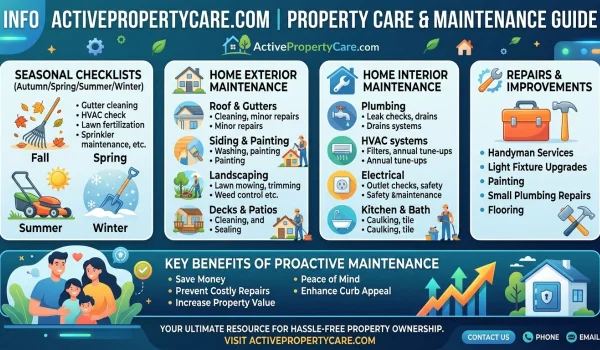
Info ActivePropertyCare.com is a search term people may use to find information about home maintenance, property management, repairs, and practical ways to protect residential or commercial buildings. Before relying on any website for professional services, readers should understand what it offers, how to verify its information, and which property care tasks require qualified professionals.
Property care involves more than fixing problems after they appear. A well-organized approach combines routine inspections, timely repairs, financial planning, safety checks, energy efficiency, and reliable recordkeeping. These practices help homeowners, landlords, and property managers maintain comfortable buildings while reducing avoidable damage.
What Is Info ActivePropertyCare.com?
Info ActivePropertyCare.com appears in searches related to property care and property management information. Readers should distinguish the informational website from any separate business that may offer maintenance, repairs, or rental management services.
Overview of the Website and Its Purpose
A property care information website can help readers understand maintenance schedules, repair options, landlord responsibilities, renovation planning, and ways to protect a building. The value of such a resource depends on the accuracy, clarity, and practical usefulness of its content.
Before following a recommendation, check whether the article explains its methods, identifies relevant limitations, and distinguishes general guidance from professional advice.
Who Can Benefit From ActivePropertyCare.com?
Different readers have different property care needs.
- Homeowners: Learn how to inspect, maintain, and improve a home.
- Landlords: Organize repairs, respond to tenant concerns, and plan maintenance expenses.
- Property managers: Track inspections, coordinate contractors, and maintain service records.
- Real estate investors: Assess maintenance risks and consider long-term ownership costs.
- First-time property owners: Understand routine upkeep and recognize problems that require professional help.
Types of Property Care Information Available
Useful property care resources commonly cover home repairs, seasonal maintenance, landscaping, energy efficiency, structural protection, rental property management, and budgeting. Some also explain how to compare contractors and prepare for inspections.
Readers should evaluate each topic on its own merits rather than assuming every article provides complete or professionally verified advice.
Is Info ActivePropertyCare.com a Property Service Provider or an Information Resource?
This distinction matters because reading maintenance advice is different from hiring a company to perform work.
The name alone does not establish whether a website employs contractors, manages rental properties, or simply publishes educational content. Check its current About page, service descriptions, business identity, contact information, and terms before paying for any service.
If the site only publishes articles, treat it as an information resource rather than a verified contractor directory. Confirm any proposed service directly with the business that would perform the work.
What You Can Learn at Info ActivePropertyCare.com
Property care covers the everyday tasks that keep buildings functional, safe, comfortable, and attractive. The most useful guidance explains what to inspect, when to act, which tools to use, and when a qualified professional should take over.
Home Maintenance and Repairs
Routine maintenance helps identify developing problems before they cause extensive damage. Homeowners should pay particular attention to plumbing, electrical systems, roofing, heating and cooling equipment, windows, doors, and foundations.
A practical home maintenance routine includes:
- Checking for visible leaks and water stains.
- Testing smoke and carbon monoxide alarms according to manufacturer instructions.
- Cleaning gutters and checking drainage.
- Inspecting doors and windows for damaged seals.
- Replacing HVAC filters according to system requirements.
- Arranging professional inspections when warning signs appear.
Keep a written record of completed work, warranties, and recurring problems. This makes it easier to recognize patterns and explain repair needs to contractors.
Home Improvement and Renovation
Home improvement projects can increase comfort, improve functionality, and address problems that routine maintenance cannot solve. Examples include bathroom upgrades, kitchen renovations, insulation improvements, flooring replacement, and structural repairs.
Before beginning a project, define its purpose and establish a realistic budget. Obtain written estimates, confirm which permits may be required, and check whether the contractor holds the licenses or insurance required in your location.
Compare estimates by reviewing the scope of work, materials, labor, exclusions, payment schedule, and warranty. The lowest initial quote may not provide the best long-term value if it omits essential work.
Outdoor Living and Landscape Management
Outdoor maintenance protects the areas surrounding a property while improving usability and appearance.
Regular tasks include trimming vegetation, removing debris, inspecting fences, maintaining outdoor lighting, cleaning paved surfaces, and checking irrigation systems. Trees and shrubs should also be managed so they do not obstruct drainage or interfere with building components.
Pay attention to the slope of the ground around the foundation. Water should drain away from the building rather than collect against exterior walls. If standing water repeatedly appears near the house, investigate the underlying drainage problem instead of relying on temporary surface fixes.
Property Protection and Damage Prevention
Property protection starts with identifying common sources of damage. Water intrusion, severe weather, neglected equipment, pests, and unauthorized access can all create expensive problems.
Owners can reduce these risks by maintaining roof coverings, sealing appropriate exterior gaps, checking plumbing connections, securing doors and windows, and keeping important documents in a safe location.
For properties in areas exposed to flooding, wildfires, storms, or freezing temperatures, adapt the maintenance plan to local hazards. Insurance coverage should also be reviewed periodically to understand exclusions, deductibles, and reporting requirements.
Energy Efficiency and Sustainable Living
Energy-efficient property care focuses on reducing unnecessary energy consumption without sacrificing comfort or indoor air quality.
Start by addressing air leaks, maintaining heating and cooling equipment, using suitable insulation, and selecting efficient lighting. Programmable or smart thermostats may help manage heating and cooling schedules when used correctly.
The U.S. Department of Energy provides practical guidance through its Energy Saver home energy efficiency resources. Use these recommendations alongside local building requirements and the needs of your specific property.
⭐ Property Care Services Explained: What Homeowners and Landlords Need to Know
Property care services vary by provider. Some businesses focus on repairs, while others coordinate routine maintenance, landscaping, inspections, or rental property operations. Understanding the scope of each service helps owners choose the right support.
Preventive Property Maintenance
Preventive maintenance involves scheduled inspections and servicing designed to reduce the likelihood of equipment failure or property damage.
Common examples include HVAC servicing, roof inspections, plumbing checks, gutter cleaning, and testing safety equipment. The correct frequency depends on the equipment manufacturer’s instructions, property age, climate, usage, and previous maintenance history.
A preventive maintenance agreement should identify the tasks included, visit frequency, reporting process, exclusions, and additional charges.
Property Repairs and Restoration
Repair services address damage or malfunction. Restoration work may be needed after flooding, fire, severe weather, or other events that affect building materials and systems.
Before approving a repair, ask the provider to explain the cause of the problem, proposed solution, materials, expected timeline, and total estimated cost. For insurance-related work, document the damage and communicate with the insurer before authorizing non-emergency repairs whenever practical.
Emergency situations require immediate attention when they involve serious safety risks, active flooding, suspected gas leaks, exposed live wiring, or structural instability.
Exterior Maintenance and Landscaping
Exterior care helps protect the building envelope and surrounding grounds. Services may include gutter cleaning, exterior painting, fence repairs, lawn care, tree maintenance, and drainage improvements.
Choose services according to actual site conditions rather than a generic package. For example, a property with mature trees may need more frequent gutter checks than one with little surrounding vegetation.
Plumbing, Electrical, and HVAC Maintenance
These systems directly affect safety, sanitation, comfort, and building performance.
- Plumbing: Inspect for leaks, drainage problems, corrosion, and unusual water pressure.
- Electrical: Watch for repeated breaker trips, damaged outlets, flickering lights, and overheating components.
- HVAC: Follow filter replacement schedules and arrange servicing when performance declines or unusual noises develop.
Electrical repairs, refrigerant work, gas-related work, and complex plumbing tasks should be handled by appropriately qualified professionals where required. Never attempt repairs that expose you to live electricity, hazardous gases, or unsafe equipment.
Roofing, Gutters, and Structural Repairs
Roofing and drainage problems can affect ceilings, walls, insulation, foundations, and indoor air quality. Visible roof damage, recurring leaks, sagging structural components, or expanding cracks deserve prompt assessment.
A contractor should explain whether the issue is cosmetic, maintenance-related, or potentially structural. Significant foundation movement, major roof sagging, or sudden structural changes require professional evaluation rather than an improvised repair.
Residential and Commercial Property Care
Residential properties typically prioritize occupant comfort, household systems, and individual repair needs. Commercial properties may require more formal inspection records, coordinated maintenance schedules, equipment servicing, and business-continuity planning.
The appropriate service plan depends on building size, occupancy, equipment complexity, applicable regulations, and the consequences of downtime.
⭐ How to Create a Complete Property Maintenance Plan
A maintenance plan turns scattered chores into a repeatable process. It should identify what needs attention, when each task is due, who is responsible, and how the work will be documented.
Inspect Your Property and Identify Maintenance Priorities
Begin with a walkthrough of the interior, exterior, and accessible utility areas. Record visible damage, leaks, unusual sounds, damaged finishes, drainage concerns, and equipment problems.
Classify findings into three categories:
- Urgent: Immediate threats to life, safety, or the building.
- Priority repairs: Problems likely to worsen if left unresolved.
- Routine maintenance: Tasks that can be scheduled according to risk and condition.
Do not enter unsafe spaces or dismantle equipment to investigate a suspected fault. Use qualified inspectors when access or diagnosis presents a risk.
Build a Seasonal Home Maintenance Checklist
A seasonal checklist helps owners account for changing weather and usage patterns. Include the tasks that apply to the local climate and the property’s construction.
| Period | Maintenance priorities |
| Spring | Check winter damage, drainage, exterior seals, and landscaping. |
| Summer | Inspect cooling performance, irrigation, outdoor structures, and ventilation. |
| Autumn | Clear gutters, inspect weatherproofing, and prepare heating equipment. |
| Winter | Watch for frozen pipes, condensation, heating problems, and storm damage. |
Adjust the schedule for local weather. In warmer climates, cooling systems may need attention throughout the year, while properties in cold regions may require more extensive freeze protection.
Set Maintenance Schedules for Essential Systems
Use manufacturer recommendations and professional advice to establish service intervals. Avoid assuming every property needs the same schedule.
Your maintenance calendar might include:
- Monthly visual checks of areas prone to leaks.
- Periodic testing of safety alarms.
- HVAC filter checks based on the equipment and filter type.
- Seasonal inspection of roof drainage and exterior surfaces.
- Scheduled servicing for major mechanical equipment.
- Prompt investigation of recurring faults.
Record the completion date, findings, contractor details, and recommended follow-up for each task.
Create an Emergency Repair Plan
An emergency plan helps occupants respond quickly without making unsafe decisions.
Include emergency contact numbers, utility shutoff locations, insurance information, contractor details, and instructions for reporting damage. Make sure household members or relevant staff know how to access the information.
For immediate hazards, prioritize personal safety and contact the appropriate emergency service or utility provider. Do not delay emergency assistance while seeking routine maintenance quotes.
Track Maintenance Tasks, Costs, and Service History
A simple spreadsheet or property management application can track outstanding work, invoices, inspection results, warranties, and recurring issues.
Each record should include the task, location, date reported, priority, assigned person, estimated cost, final cost, and completion status.
Review the records periodically. Repeated repairs to the same component may indicate an underlying problem or a need to replace the equipment.
Property Care Tips for Every Season
Seasonal maintenance works best when it reflects local conditions rather than following a rigid calendar. Weather, building design, occupancy, and equipment type all affect which tasks deserve attention.
Spring Property Maintenance Checklist
Spring is a useful time to assess damage from winter weather and prepare outdoor areas for warmer conditions.
- Check accessible roof areas and ceilings for signs of leaks.
- Inspect gutters and downspouts for blockages.
- Look for cracks, damaged seals, and exterior paint deterioration.
- Test outdoor taps and inspect irrigation systems.
- Clear debris from drainage areas.
- Arrange professional inspections for suspected structural damage.
After heavy rain, investigate persistent water accumulation near the building. Poor drainage can contribute to basement moisture and foundation problems.
Summer Home Care and Cooling System Maintenance
Warm weather places additional demands on cooling equipment and outdoor surfaces.
Keep HVAC filters clean according to the manufacturer’s guidance and ensure that outdoor units have appropriate airflow. Inspect irrigation for leaks and avoid directing excessive water toward the foundation.
Check decks, fences, and exterior finishes for weather damage. If indoor rooms remain unusually hot or humid, investigate ventilation, insulation, shading, and cooling-system performance rather than assuming the thermostat is the only issue.
Autumn Roof, Gutter, and Weatherproofing Checks
Autumn preparation can help prevent drainage problems and reduce cold-weather risks.
Clear leaves from gutters where it is safe to do so, check downspouts, inspect door and window seals, and arrange heating-system servicing when appropriate. Look for roof damage from the ground or through a qualified inspection.
Remove dead vegetation near buildings where it creates a fire hazard, and secure outdoor equipment before severe weather. Avoid climbing onto wet, steep, or damaged roofs.
Winter Plumbing Protection and Heating System Care
Cold weather can cause exposed pipes to freeze and burst. Insulate vulnerable pipes where appropriate, address drafts, and follow local recommendations for protecting plumbing during cold spells.
Keep heating equipment maintained and ensure that smoke and carbon monoxide alarms work as intended. Never use outdoor grills or fuel-burning equipment indoors as an improvised heating source.
If a pipe freezes or a heating system fails, follow safe shutdown procedures and contact a qualified professional when necessary.
⭐ Year-Round Maintenance Tasks Every Property Owner Should Follow
Some maintenance responsibilities apply in every season:
- Investigate active leaks as soon as they appear.
- Keep escape routes and safety equipment accessible.
- Address electrical warning signs promptly.
- Maintain clear drainage paths around the property.
- Store invoices, inspection reports, and warranty information.
- Review outstanding repairs and upcoming expenses regularly.
- Respond to tenant reports and document the action taken.
A consistent routine makes it easier to identify developing problems before they require major repairs.
⭐ Preventive Maintenance vs. Reactive Repairs: Which Is Better?
Preventive maintenance focuses on identifying and addressing potential problems before a failure occurs. Reactive maintenance begins after a problem develops. Both approaches have a place in property care, but relying entirely on emergency repairs can make costs and scheduling harder to control.
Benefits of Preventive Property Maintenance
Preventive maintenance helps property owners plan inspections, schedule servicing, and identify deterioration early. It can also reduce unexpected disruptions and help equipment operate according to its intended specifications.
For example, checking a roof regularly may reveal damaged flashing before water reaches the ceiling. Servicing an HVAC system may also identify worn components before they cause a breakdown.
Preventive maintenance cannot eliminate every failure. Its purpose is to manage foreseeable risks and address known maintenance needs systematically.
Risks and Costs of Delayed Repairs
A small defect can become a more expensive problem when the underlying cause remains unresolved. A leaking pipe, for example, can damage cabinets, flooring, insulation, and nearby building materials.
Delayed repairs may also create additional problems:
- Increased repair scope and labor requirements.
- Disruption to occupants or business operations.
- Greater risk of secondary damage.
- Potential safety and compliance concerns.
- More difficult budgeting because of unexpected expenses.
The longer a problem remains unaddressed, the harder it may become to determine its original cause. Document the issue when it first appears.
How to Decide Between Repair and Replacement
Repairing a component may make sense when the damage is limited, the underlying system remains reliable, and the repair cost is reasonable. Replacement may be more appropriate when failures recur, parts are unavailable, or the component no longer meets safety or performance requirements.
Compare the total expected cost of each option rather than considering only the immediate price. Include future maintenance, energy consumption where relevant, expected service life, downtime, and warranty terms.
For major systems or structural components, seek an assessment from a qualified professional before making the decision.
Signs Your Property Needs Immediate Attention
Some warning signs should never be left until the next scheduled inspection.
- Active water leaks near electrical equipment.
- The smell of gas or suspected carbon monoxide exposure.
- Sudden structural movement or a visibly sagging roof.
- Burning smells, sparks, or repeatedly tripping electrical breakers.
- Significant flooding or rapidly spreading water damage.
- Smoke, fire, or damaged safety systems.
Move away from immediate hazards and contact emergency services or the appropriate utility provider when necessary. Routine property maintenance should never take priority over personal safety.
⭐ How to Identify and Fix Common Home Maintenance Problems
Effective troubleshooting begins with recognizing symptoms and identifying when professional assessment is necessary. A visible defect does not always reveal its underlying cause, so avoid choosing a repair before understanding the problem.
Roof Leaks and Water Damage
Water stains on ceilings, peeling paint, damp insulation, and dripping water can indicate a roof leak or another source of water intrusion.
Check whether the problem occurs after rain, during plumbing use, or near a particular fixture. This information can help a contractor investigate the cause.
Do not climb onto a damaged or slippery roof. Arrange a professional inspection when the source is unclear or the roof is unsafe to access. Repairing the visible ceiling stain without fixing the source will not resolve the underlying issue.
Plumbing Leaks and Drainage Issues
Common plumbing warning signs include dripping connections, low water pressure, slow drains, unexplained water bills, and damp cabinets.
Inspect accessible fittings for visible leaks, but do not dismantle pressurized pipes or attempt complex plumbing work without the necessary skills. Persistent drainage problems may indicate a blockage, damaged pipe, or broader sewer issue.
If a leak is active, use the appropriate shutoff valve if it is safe to do so and arrange repairs promptly.
Mold, Dampness, and Moisture Control
Mold can develop when moisture remains on building materials. Common causes include leaking pipes, roof damage, condensation, poor ventilation, and water entering through foundations.
The U.S. Environmental Protection Agency explains that moisture control is central to preventing indoor mold growth. Its guidance on mold and the home covers moisture prevention, cleanup, and when additional help may be necessary.
Useful prevention steps include:
- Repairing leaks and other sources of water.
- Improving ventilation in bathrooms and kitchens.
- Addressing persistent condensation.
- Drying water-damaged materials promptly.
- Investigating recurring dampness instead of repeatedly repainting affected areas.
Extensive mold growth, substantial water damage, or suspected contamination within hidden building materials may require professional assessment. People with health concerns should seek appropriate medical advice.
HVAC Problems and Poor Indoor Air Quality
Heating and cooling problems may appear as weak airflow, uneven temperatures, unusual noises, unpleasant odors, or unexplained increases in energy use.
Start with basic checks permitted by the equipment manufacturer, such as checking the thermostat settings and inspecting the air filter. If the system continues to perform poorly, arrange professional servicing.
Never open sealed refrigeration systems, bypass safety switches, or attempt repairs involving hazardous electrical or gas components without appropriate qualifications.
Persistent indoor air quality problems may also involve moisture, ventilation, filtration, or pollutants from other sources. A qualified professional can help identify the relevant cause.
Cracks in Walls, Foundations, and Basement Structures
Small cracks may result from ordinary material movement, shrinkage, or changes in environmental conditions. However, crack size alone cannot reliably establish whether a structure is safe.
Pay attention to changes over time, water entering through cracks, uneven floors, sticking doors, and visible displacement between surfaces.
Record the location and appearance of concerning cracks. Seek assessment from a qualified structural professional if cracks widen, recur, accompany other movement, or appear suddenly. Significant movement or an immediate collapse risk requires urgent action.
Pest Prevention and Exterior Damage
Pests can damage wood, insulation, stored materials, and other parts of a building. Signs may include droppings, damaged packaging, gnaw marks, mud tubes, or repeated insect activity.
Reduce access to food and water, seal suitable entry points, and correct moisture problems. Avoid sealing areas without checking whether pests are already inside.
For termites, persistent infestations, or pests that present health or safety risks, use a qualified pest control provider familiar with local regulations.
⭐ How to Estimate Property Maintenance Costs and Set a Budget
A property maintenance budget should account for routine servicing, known defects, planned improvements, and unexpected repairs. The right amount depends on the property’s age, condition, location, construction, and equipment.
Factors That Affect Home Repair and Maintenance Costs
The main cost factors include:
- The size and complexity of the repair.
- Labor rates and local contractor availability.
- Material quality and availability.
- The accessibility of the damaged area.
- Permit, inspection, or disposal requirements.
- The extent of secondary damage.
- The need for specialist equipment or qualified tradespeople.
A simple repair may become more expensive if a contractor discovers concealed damage. Ask whether an estimate includes investigation, materials, cleanup, permits, and any necessary follow-up work.
Routine Maintenance vs. Unexpected Repair Expenses
Routine maintenance is generally easier to schedule because the work is known in advance. Unexpected repairs are less predictable and may require immediate spending.
Separate these categories in your budget. Track recurring services, planned replacements, and unresolved defects independently so you can identify which expenses are predictable and which need contingency planning.
For rental properties, include the potential financial effect of repair-related vacancies or service interruptions where relevant.
Building an Annual Property Maintenance Budget
Start by listing the major systems and components that need attention during the year. Review previous invoices, inspection reports, warranties, and known defects.
Next, organize expenses into three groups:
| Budget category | Examples |
| Routine upkeep | Cleaning gutters, servicing equipment, landscaping |
| Planned repairs | Replacing worn flooring, repairing damaged exterior finishes |
| Emergency reserve | Urgent plumbing repairs, storm damage, unexpected equipment failure |
Estimate each item using current local quotes where possible. Review the budget periodically and update it when inspections reveal new issues.
There is no single maintenance budget that suits every property. A recently renovated apartment and an older building with aging systems may require very different financial plans.
When to Hire a Professional Instead of Doing It Yourself
DIY work may suit straightforward tasks when the owner has the necessary skills and can complete the job safely. Professional help becomes more important when a repair involves structural integrity, electrical systems, gas, complex plumbing, hazardous materials, or local licensing requirements.
Consider the cost of tools, materials, time, and possible mistakes before deciding to do the work yourself.
A qualified contractor can also provide documentation that may be useful for warranties, insurance claims, or future property transactions.
Practical Ways to Reduce Long-Term Property Care Costs
Owners can manage maintenance spending without ignoring essential work.
- Address small defects before they spread.
- Compare detailed estimates from qualified contractors.
- Follow manufacturer servicing instructions.
- Keep accurate records of repairs and warranties.
- Investigate recurring failures instead of repeatedly patching symptoms.
- Plan major replacements before equipment fails whenever practical.
- Avoid unnecessary upgrades that do not address a real need.
The goal is not to choose the cheapest option every time. It is to make informed decisions that balance safety, reliability, and total ownership cost.
⭐ DIY Property Maintenance vs. Hiring Professional Contractors
DIY maintenance can help property owners handle routine tasks, but it is not appropriate for every repair. The decision should depend on risk, complexity, skill, and legal requirements.
Maintenance Tasks Homeowners Can Handle Safely
Depending on the task and property conditions, homeowners may be able to:
- Replace accessible HVAC filters.
- Clean ordinary household surfaces.
- Check for visible leaks.
- Replace standard light bulbs.
- Maintain lawns and garden beds.
- Inspect accessible areas for visible damage.
- Keep maintenance records and organize service appointments.
Follow product instructions and use suitable protective equipment. Stop if a task requires unsafe access, specialized tools, or work on a hazardous system.
Repairs That Require Licensed Professionals
Certain jobs require specialized training, permits, or legally authorized tradespeople. Examples may include electrical installations, gas work, major plumbing alterations, structural repairs, and certain HVAC tasks.
Requirements vary by jurisdiction, so verify the rules that apply to your property. Even when a license is not legally required for a particular task, professional assistance may still be the safer choice.
How to Compare Property Maintenance Companies
Evaluate providers using consistent criteria rather than choosing solely by price.
| Evaluation factor | What to check |
| Qualifications | Relevant licenses, training, and specialist experience |
| Insurance | Applicable liability and workers’ compensation coverage |
| Scope of work | Clearly defined tasks, materials, and exclusions |
| Pricing | Written estimate and transparent additional charges |
| References | Relevant, independently verifiable customer feedback |
| Warranty | Written terms for workmanship and materials |
| Communication | Clear updates, documentation, and complaint handling |
Verify important claims independently. A professional-looking website or positive testimonial does not, by itself, prove that a provider is qualified or reliable.
Questions to Ask Before Hiring a Contractor
Before approving work, ask:
- What is causing the problem?
- What work do you recommend, and why?
- What is included in the estimate?
- Are permits or inspections required?
- Who will perform and supervise the work?
- What is the expected timeline?
- How will changes to the price be approved?
- What warranty or completion documentation will I receive?
Request written answers for significant projects. Make sure the contract describes the agreed work, payment terms, completion expectations, and procedure for handling changes.
Warning Signs of Unreliable Property Service Providers
Be cautious if a provider refuses to provide a written estimate, pressures you into an immediate non-emergency decision, requests unexplained full payment upfront, or cannot verify relevant qualifications.
Other warning signs include vague business details, inconsistent contact information, unusually low quotes without a clear scope, and promises that seem unrealistic.
Pause the transaction and verify the business before sharing sensitive information or making a payment.
⭐ Property Management for Landlords and Rental Property Owners
Property management combines maintenance coordination with the financial, administrative, and communication responsibilities involved in renting a property. Landlords who establish clear procedures can respond to issues more consistently and maintain better records.
Preparing a Rental Property for Tenants
Before a tenant moves in, inspect the property and address known safety or maintenance issues. Check plumbing, electrical systems, heating and cooling, locks, appliances, ventilation, and visible signs of water damage.
Document the property’s condition with dated photographs and a written inspection report. Confirm that required safety equipment is installed and working.
A documented move-in process helps establish a baseline for future inspections and makes it easier to distinguish pre-existing defects from new reports.
Rental Pricing and Property Readiness
Rental pricing should reflect local market conditions, location, property size, condition, amenities, and comparable available properties.
Research similar rentals and account for the cost of repairs and ongoing maintenance. A high asking price may increase vacancy risk if the property does not offer comparable value.
Before advertising, make sure the property is clean, functional, safe, and compliant with applicable rental requirements.
Tenant Screening and Lease Agreements
Tenant screening should follow applicable fair housing, privacy, and consumer protection laws. Use consistent, relevant criteria and obtain any legally required consent before checking information.
A written lease should clearly explain rent, payment dates, deposits, maintenance responsibilities, access rules, lease duration, and procedures for reporting repairs. Local laws may restrict what a lease can require or prohibit.
Have the agreement reviewed by a qualified local professional if its legal requirements are unclear.
Rent Collection and Property Expense Tracking
Use a consistent rent collection process that identifies payment deadlines, accepted payment methods, receipts, and procedures for handling late payments.
Keep rental income separate from property expenses in your records. Track maintenance invoices, insurance premiums, taxes, utility costs, management fees, and major improvements.
Accurate records help owners evaluate cash flow, prepare tax documentation, and understand the true cost of operating a rental property.
Building Strong Landlord-Tenant Relationships
Clear communication reduces confusion and helps maintenance issues receive timely attention.
Provide tenants with a straightforward way to report problems. Confirm receipt of important requests, explain the next steps, and communicate any delays.
Treat repair reports seriously and follow the notice, entry, and response requirements that apply locally. Maintain a written record of requests and completed work.
Managing Tenant Maintenance Requests and Emergencies
Create a system that separates emergencies from routine requests.
An active major leak, suspected gas leak, or serious electrical hazard requires a different response from a dripping tap or minor cosmetic issue. Provide tenants with appropriate emergency instructions and contact information.
Record when each request was received, its priority, the response taken, contractor visits, and completion date. If the repair cannot be completed immediately, explain the interim measures and expected next steps.
When to Hire a Professional Property Manager
A property manager may be useful when an owner lacks time, lives far from the property, manages multiple units, or needs help coordinating tenant communications and maintenance.
Before hiring one, review the management agreement carefully. Check the fee structure, included services, repair authorization limits, reporting procedures, termination terms, and responsibility for emergencies.
Property management is not automatically cost-effective for every landlord. Compare the service fee with the time, administrative burden, and operational risks it would help address.
⭐ Residential vs. Commercial Property Maintenance
Residential and commercial properties share many maintenance needs, but their occupancy patterns, equipment, and operational requirements can differ significantly.
Key Differences in Maintenance Requirements
Residential maintenance often focuses on household systems, occupant comfort, and individual repair requests. Commercial buildings may require more complex mechanical systems, scheduled inspections, access coordination, and documentation for business operations.
Commercial maintenance planning should also consider the effect of equipment failure on employees, customers, inventory, and business continuity.
Maintenance Planning for Rental Homes and Apartments
Rental housing requires a system for handling tenant reports, coordinating access, documenting repairs, and meeting applicable housing standards.
Owners should schedule inspections lawfully, keep common areas safe, and clarify which maintenance responsibilities belong to the landlord and which belong to the tenant.
Multi-unit properties may benefit from centralized maintenance tracking because the same equipment or building components can affect several households.
Commercial Building Inspections and Facility Management
Commercial facilities may include elevators, fire protection systems, complex HVAC equipment, specialized electrical installations, and other systems requiring scheduled professional servicing.
The inspection plan should reflect the building’s use, equipment specifications, applicable codes, and operational risks.
Facility managers should maintain service records, inspection reports, equipment manuals, emergency procedures, and relevant compliance documentation.
Choosing the Right Maintenance Strategy for Your Property
Start with the building’s purpose, age, condition, occupancy, and major equipment. Identify the consequences of a failure and prioritize systems whose malfunction could threaten safety or interrupt essential operations.
A small residential rental may need a straightforward checklist and a trusted contractor network. A large commercial building may require a formal maintenance management system, specialist vendors, and more detailed reporting.
The appropriate strategy is the one that matches the property’s actual risks and operational needs.
⭐ Property Safety, Legal Compliance, and Risk Management
Property maintenance involves more than protecting physical assets. Owners and managers must also consider occupant safety, building regulations, insurance conditions, and the legal responsibilities associated with their properties.
Electrical, Fire, and Plumbing Safety
Inspect accessible areas for damaged wiring, leaking pipes, blocked escape routes, and visible equipment deterioration. Test smoke and carbon monoxide alarms according to manufacturer instructions and local requirements.
Keep fire extinguishers and other safety equipment accessible where required. Never ignore burning smells, exposed wiring, gas odors, or repeated electrical faults.
Use qualified professionals for repairs that require specialist knowledge or legal authorization.
Building Codes, Permits, and Inspection Requirements
Building codes and permit rules vary by location and project type. Structural changes, electrical alterations, plumbing work, additions, and changes in building use may require approval or inspection.
Before beginning substantial work, contact the relevant local authority or consult a qualified professional familiar with local requirements.
Do not assume that a contractor’s proposal automatically satisfies every legal requirement. Confirm who is responsible for permits, inspections, and final documentation.
Landlord Responsibilities and Tenant Safety
Landlord obligations depend on local law, the lease, and the type of property. They may include maintaining essential services, addressing certain hazards, providing legally required safety equipment, and respecting tenant privacy and access rights.
Owners should understand applicable rules for repairs, notice periods, habitability, security deposits, and recordkeeping.
When a dispute arises, preserve relevant communications and documents and seek qualified legal advice when necessary.
Preventing Property Damage and Liability Risks
Risk management starts with identifying hazards and deciding how to reduce them.
Useful steps include repairing loose handrails, addressing trip hazards, maintaining exterior lighting, clearing blocked exits, documenting inspections, and arranging professional assessments for known defects.
Review insurance policies to understand covered events, exclusions, deductibles, and notification deadlines. Keep receipts and photographs that may support a future claim.
When to Contact Emergency Repair Services
Contact appropriate emergency services when there is a fire, suspected carbon monoxide exposure, a dangerous gas leak, or another immediate threat to life.
For severe plumbing leaks, electrical hazards, or structural damage, follow safe evacuation or shutdown procedures where appropriate and contact qualified emergency assistance.
Do not enter flooded electrical areas, unstable structures, or spaces containing suspected hazardous gases. Wait for trained responders when the area is unsafe.
⭐ Smart Technology and Modern Property Care Solutions
Technology can simplify maintenance scheduling, improve communication, and help property owners keep accurate records. However, digital tools are only useful when information is maintained and someone is responsible for acting on it.
Property Management Software and Maintenance Tracking
Property management software can organize tenant requests, work orders, contractor details, invoices, lease records, and inspection schedules.
For smaller properties, a spreadsheet or shared calendar may be sufficient. Larger portfolios may benefit from software that supports multiple users, automated reminders, reporting, and centralized documentation.
Compare products based on their actual features, cost, ease of use, data protection, and compatibility with existing workflows.
Smart Home Devices for Leak, Fire, and Security Alerts
Smart leak sensors can alert owners to water in vulnerable areas. Connected thermostats can help manage heating and cooling schedules, while suitable security devices can provide notifications about access or activity.
These devices can improve awareness, but they do not replace inspections or professional servicing. Check battery life, connectivity, installation requirements, and compatibility before relying on alerts.
Consider privacy and cybersecurity when connecting property devices to an online account. Use strong authentication and keep device software updated where supported.
Digital Property Inspections and Maintenance Records
Digital inspection forms make it easier to record defects, attach photographs, assign tasks, and track completion.
A useful inspection record identifies the property, inspection date, observed issue, priority, recommended action, responsible person, and follow-up date.
Keep backups and restrict access to sensitive tenant or owner information. Retain records according to relevant legal, contractual, and insurance requirements.
How Technology Improves Service Response and Cost Control
Automated reminders can reduce missed maintenance tasks, while centralized work orders help managers identify outstanding repairs.
Historical records can also reveal repeated equipment failures and recurring expenses. This information supports better planning when deciding whether to repair, replace, or investigate a system.
Technology cannot compensate for poor decisions or unreliable contractors. Use it to support clear responsibilities and sound maintenance practices.
Sustainable Property Maintenance and Energy Efficiency
Sustainable property care focuses on using energy and water efficiently, limiting unnecessary waste, and choosing durable solutions. Improvements should suit the building, climate, budget, and needs of its occupants.
Reducing Household Energy Consumption
Start with straightforward measures such as switching off unnecessary lighting, using efficient bulbs, sealing suitable air leaks, and maintaining heating and cooling equipment.
Where appropriate, consider insulation improvements, efficient appliances, and thermostat adjustments. Evaluate larger upgrades by considering installation costs, energy savings, expected service life, and local incentives.
Avoid sealing a building so tightly that it develops ventilation or moisture problems. Energy efficiency and indoor air quality should be considered together.
Water Conservation and Efficient Plumbing Fixtures
Fix dripping taps and leaking toilets, and consider suitable water-efficient fixtures when replacing older equipment.
Use irrigation according to plant requirements and local watering conditions. Check outdoor plumbing and irrigation lines for leaks that may remain hidden for long periods.
Unexpected increases in water use can indicate a leak, but they may also reflect changes in occupancy or usage. Investigate the cause before choosing a solution.
Eco-Friendly Cleaning and Landscaping Practices
Choose cleaning products appropriate for the surface and use them according to label directions. Never mix household chemicals unless the product instructions explicitly permit it.
For landscaping, consider plants suited to the local climate, efficient irrigation, soil health, and sensible use of fertilizers. Native or climate-adapted plants may reduce maintenance needs in suitable locations.
Dispose of paint, solvents, batteries, and other hazardous materials through appropriate local programs rather than pouring them into drains.
Improving Insulation, Ventilation, and Indoor Comfort
Insulation can reduce unwanted heat transfer, while ventilation helps manage indoor moisture and pollutants. Both should be considered when improving a property’s energy performance.
Address air leaks where appropriate, maintain ventilation equipment, and investigate persistent condensation or musty odors.
If insulation or air-sealing work affects combustion appliances, ventilation, or moisture behavior, seek professional guidance before proceeding.
Long-Term Benefits of Sustainable Property Upgrades
Well-chosen improvements may reduce utility consumption, improve comfort, and decrease certain maintenance demands. Durable materials can also reduce the frequency of replacement.
The financial benefit depends on installation cost, energy prices, property conditions, and how the building is used. Compare realistic estimates rather than assuming every sustainable upgrade will pay for itself within a particular period.
⭐ How to Contact Info ActivePropertyCare.com
Readers seeking clarification should use contact information published on the website they intend to reach. Because similarly named websites can exist, verify the exact domain before sending messages or sharing personal details.
Finding Official Website Contact Information
Start by checking the website’s Contact page and About page. Confirm that the domain in the browser matches the intended site and that the contact information appears consistently across its own pages.
Do not assume that a contact address belonging to a similarly named website is associated with Info ActivePropertyCare.com.
What to Include in a Property Care Inquiry
A clear inquiry helps the recipient understand the request. Include:
- A short description of the question or issue.
- The relevant article title or page, if applicable.
- The specific information you need clarified.
- Relevant non-sensitive details.
- Your preferred method of response, if appropriate.
Avoid sending passwords, payment card details, identity documents, or unnecessary information about tenants.
How to Request Information About Services
If you want to hire a contractor or property manager, first establish whether the website actually provides that service or merely publishes information about it.
Ask for the business’s legal name, service area, written scope of work, pricing, qualifications, and contract terms. Verify these details independently before committing to payment.
What to Do If You Do Not Receive a Response
Check whether the website provides a response timeframe and whether your message was delivered successfully. Review spam folders and send one concise follow-up if appropriate.
If the matter concerns an urgent property hazard, do not wait for an informational website to reply. Contact the appropriate local emergency service, utility provider, landlord, or qualified contractor.
How to Verify Whether a Contact Number or Email Is Genuine
Compare the contact details with the intended website’s current contact page. Look for inconsistencies in the domain, business name, address, and description of services.
For a contractor, verify licenses or registrations through the relevant authority where such systems exist. For payment requests, confirm the recipient and agreed amount through a trusted communication channel before transferring funds.
⭐ Is Info ActivePropertyCare.com Legitimate and Safe to Use?
A website’s legitimacy should be assessed through verifiable information rather than its name, appearance, or search ranking alone. A website can publish useful articles without being a licensed property service company, and a professional design does not guarantee that every claim is accurate.
How to Verify Website Ownership and Contact Details
Check the domain carefully and review the site’s About, Contact, Privacy Policy, and Terms pages. Look for a consistent explanation of who operates the site and how readers can reach the responsible organization.
Where appropriate, consult domain registration information, business registries, or relevant licensing authorities. Privacy-protected domain registration is not, by itself, proof of wrongdoing, but it may limit the ownership information available publicly.
If the site claims to provide regulated services, verify those claims through the relevant authority.
Checking Website Transparency and Content Accuracy
Useful property care content should explain its recommendations clearly and distinguish established guidance from opinions or general suggestions.
Look for named authors where relevant, qualified review for technical claims, publication or update dates, clear correction procedures, and links to authoritative information when necessary.
Be cautious with articles that make broad claims without supporting evidence or present generic information as a guaranteed solution for every property.
Distinguishing Informational Websites From Actual Service Businesses
An informational website publishes advice, educational articles, or guides. A service business offers defined work such as maintenance, inspections, repairs, or property management.
Some organizations do both, but that relationship should be clearly stated and verifiable.
Before paying, confirm who will perform the work, which business is responsible for the contract, how complaints are handled, and whether the service matches your requirements.
How to Identify Misleading Property Service Claims
Potential warning signs include guaranteed outcomes without a clear basis, unverifiable qualifications, unclear pricing, copied business identities, and pressure to pay immediately.
Check customer reviews across independent sources, but consider their context and authenticity. A small number of reviews, whether positive or negative, may not provide a complete picture.
Request written evidence for important claims and avoid relying on testimonials alone when evaluating an expensive or safety-critical service.
Protecting Personal and Payment Information Online
Use the correct domain and a secure connection when submitting information. A secure connection protects data in transit but does not independently prove that a business is trustworthy.
Use strong, unique passwords for online accounts and avoid sharing sensitive financial or identity information unless it is necessary and the recipient has been verified.
Before making a payment, confirm the business identity, invoice, contract, and refund terms. Keep a copy of the transaction and related communications.
About ActivePropertyCare: Mission, Editorial Standards, and Expertise
A property care website is most useful when readers can understand its purpose, identify who is responsible for its content, and evaluate how technical recommendations are developed.
The Purpose and Vision of ActivePropertyCare
Property care resources can help readers make informed decisions about maintenance, renovation, rental management, and building protection.
A clear editorial mission should explain the intended audience and the subjects the website covers. Readers should also be able to distinguish educational content from paid services or commercial recommendations.
Who Creates the Website’s Property Care Content?
Author information helps readers understand the background behind technical advice. Relevant experience may include property maintenance, construction, facilities management, real estate, or other directly related fields.
However, a job title or author biography should not be treated as proof of expertise without supporting information. Technical and safety-critical content benefits from review by appropriately qualified professionals.
If the website does not clearly identify an author or reviewer, readers should independently verify important recommendations.
⭐ How Property Maintenance Advice Is Researched and Verified
Reliable property guidance should be based on relevant building requirements, manufacturer instructions, professional standards, and authoritative resources.
A responsible research process includes:
- Checking primary or official sources for technical and regulatory claims.
- Distinguishing general maintenance guidance from jurisdiction-specific requirements.
- Avoiding unsupported cost estimates or promises of guaranteed savings.
- Identifying situations that require professional assessment.
- Reviewing older content when standards, products, or regulations change.
These practices help readers understand not only what to do but also when a recommendation may not apply to their property.
Editorial Quality, Content Updates, and Corrections
Property care information can become outdated as products, building codes, and recommended practices change.
An effective editorial process reviews important content periodically, corrects factual errors, and makes significant updates when necessary. Clear explanations of limitations are particularly important for structural, electrical, fire safety, and legal topics.
Readers should verify time-sensitive requirements with the relevant local authority or qualified professional.
Contact and Feedback Information
Readers should use the contact details published on the exact website they intend to reach. Feedback can help identify unclear instructions, outdated information, and topics that deserve further explanation.
When reporting an error, identify the relevant page and describe the specific claim that appears incorrect. Avoid including confidential property or tenant information in public comments.
Frequently Asked Questions About Info ActivePropertyCare.com
What Is Info ActivePropertyCare.com?
Info ActivePropertyCare.com is a search term associated with online property care and property management information. Readers should check the site’s current content and ownership details to understand its purpose and verify any claims about its services.
What Types of Property Maintenance Information Does the Website Offer?
Property care resources commonly cover repairs, preventive maintenance, seasonal checklists, renovation planning, landscaping, energy efficiency, and rental property management. Check the specific website’s published content to confirm which topics it actually covers.
Is Info ActivePropertyCare.com an Actual Property Management Company?
The domain name alone does not establish whether it operates as a property management company. Verify its business identity, service descriptions, contract terms, and relevant credentials before hiring it or paying for a service.
How Can I Contact Info ActivePropertyCare.com?
Check the Contact page on the exact website you intend to reach and confirm that the domain matches. Use the published contact method for general questions, and contact an appropriate local professional for urgent property repairs.
Is Info ActivePropertyCare.com a Legitimate Website?
Assess the website’s transparency, contact information, content quality, and verifiable business claims. A professional appearance or secure connection alone cannot prove legitimacy, so independently verify important claims before sharing sensitive information or making payments.
Can I Find Professional Home Repair Services Through ActivePropertyCare.com?
That depends on whether the specific website provides a genuine contractor directory or directly offers repair services. Confirm the provider’s identity, service area, qualifications, insurance, written estimate, and contract before arranging work.
How Often Should I Schedule Property Maintenance?
The schedule depends on the building’s age, equipment, condition, local climate, and manufacturer recommendations. Inspect vulnerable areas regularly, follow required servicing intervals, and investigate unusual symptoms promptly instead of waiting for the next scheduled visit.
What Is the Difference Between Property Care and Property Management?
Property care focuses on maintaining a building through inspections, repairs, servicing, and damage prevention. Property management is broader and may include rent collection, tenant communication, lease administration, financial reporting, and maintenance coordination.
How Can I Reduce Property Maintenance Costs?
Schedule preventive inspections, repair developing problems promptly, compare detailed contractor estimates, and maintain accurate records. Plan for major replacements where possible, but never postpone safety-critical repairs simply to reduce immediate spending.
When Should I Hire a Professional Property Maintenance Company?
Hire an appropriately qualified professional when a repair involves significant safety risks, specialized equipment, structural concerns, complex systems, or work that requires licensing. Professional support may also be worthwhile when managing several properties or coordinating recurring maintenance tasks.
How Can I Protect My Property From Seasonal Damage?
Adapt maintenance to local weather by checking drainage, roof condition, exterior seals, plumbing, and heating or cooling equipment before relevant seasonal changes. Address existing defects early and use professional inspections when damage is difficult or unsafe to assess yourself.

Reece Fisher is a Home Expert and Writer at Caption Disk, covering all aspects of home improvement, interior design, home decor, DIY projects, gardening, and home maintenance. He shares practical tips, helpful ideas, and valuable insights to help readers improve their homes and living spaces.