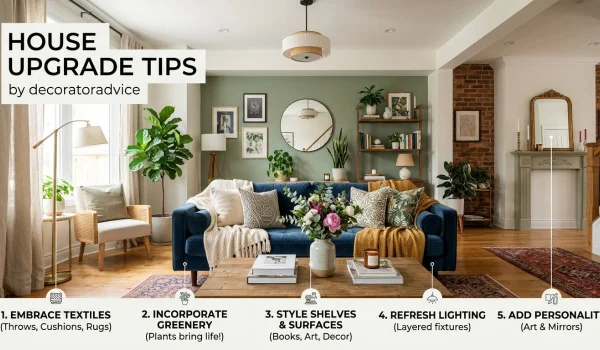
Decoradhouse upgrade tips by DecoratorAdvice focus on practical ways to improve a home’s appearance, comfort, organization, and everyday functionality. The most effective home upgrades do not always require expensive furniture or a complete renovation. Small changes to lighting, paint, storage, fixtures, and room layouts can make a noticeable difference when they suit the home’s needs.
A successful home improvement plan combines good design with practical decisions. Before buying decorative items, consider how you use each room, how much maintenance you can manage, and which improvements will deliver the most value for your budget.
Understanding Modern Home Décor and Interior Upgrades
Modern home décor combines visual simplicity, comfortable furniture, useful storage, suitable lighting, and materials that work well together. It does not require every room to look minimalist or follow the latest trend. A modern interior should reflect your lifestyle while making daily activities easier.
Useful home upgrades include:
- Repainting walls to create a fresh, coordinated color scheme.
- Replacing outdated cabinet handles, taps, or light fixtures.
- Improving natural light and adding layered artificial lighting.
- Rearranging furniture to create clearer walking paths.
- Adding shelves, storage baskets, and multifunctional furniture.
- Refreshing curtains, rugs, cushions, and bedding.
- Repairing damaged surfaces before adding new decorations.
The best results come from treating the home as a connected space. Choose colors, finishes, and materials that complement one another without making every room look identical.
How to Balance Style, Comfort, and Functionality
A beautiful room should also be comfortable and easy to use. An oversized sofa may look impressive, but it can make a small living room difficult to navigate. Similarly, decorative open shelves may look attractive but become frustrating if they collect clutter.
Balance these three priorities before making a purchase:
- Style: Choose a consistent color palette, suitable textures, and a few meaningful decorative accents.
- Comfort: Consider seating, mattress quality, room temperature, privacy, and lighting.
- Functionality: Ensure furniture fits the room, storage meets your needs, and frequently used items remain accessible.
For example, a family living room may benefit more from washable covers, flexible seating, and closed storage than from delicate decorative objects. A home office needs task lighting, comfortable seating, and organized cables as much as it needs attractive décor.
Who Can Benefit From These Home Improvement Tips?
These ideas can help homeowners, renters, first-time buyers, and anyone planning to refresh an existing space. Homeowners may have more freedom to replace fixtures or change flooring, while renters can focus on reversible improvements such as movable lamps, removable décor, rugs, and freestanding storage.
They are also useful for people preparing a property for sale or rent. Clean surfaces, functional lighting, organized rooms, and a well-maintained entrance can help a property make a stronger first impression. However, expensive upgrades do not automatically guarantee a higher selling price, so major projects should be evaluated against local market conditions and the property’s existing condition.
How to Plan a Home Upgrade Without Overspending
Planning helps you avoid rushed purchases, unfinished projects, and unnecessary renovation costs. Start by identifying problems, setting a spending limit, and deciding which improvements matter most.
Identify Your Home’s Biggest Improvement Needs
Walk through every room and note what needs attention. Separate essential repairs from cosmetic improvements so you do not spend money decorating an area that still has a serious underlying problem.
Use three categories:
| Priority | Examples | Recommended approach |
| Essential repairs | Leaks, damaged wiring, persistent dampness, unsafe flooring | Address promptly and use qualified professionals where needed |
| Functional improvements | Poor storage, inadequate lighting, awkward furniture placement | Plan based on daily use |
| Cosmetic updates | New paint, cushions, artwork, decorative accessories | Complete after essential work |
Check ceilings, windows, doors, floors, plumbing fixtures, ventilation, and electrical outlets. If you notice recurring dampness, unusual electrical behavior, or structural damage, investigate the cause before covering it with paint or decoration.
Set a Realistic Home Renovation Budget
Calculate how much you can spend without affecting essential household expenses. Then estimate the cost of materials, labor, delivery, equipment rental, waste removal, and any required permits.
Get itemized estimates for larger jobs rather than relying on a single overall price. Compare what each contractor includes, such as preparation, finishing, cleanup, and disposal.
Keep a contingency reserve for unexpected problems. The appropriate amount depends on the property’s condition and the complexity of the work. Older homes and projects involving plumbing, electrical systems, or hidden structural elements may need more flexibility than simple decorative updates.
Prioritize High-Impact, Low-Cost Improvements
Focus first on changes that improve several aspects of a room without requiring a major investment.
Consider these options:
- Deep-clean walls, floors, windows, and fixtures.
- Rearrange existing furniture to improve movement.
- Replace worn cabinet handles or door hardware.
- Update outdated lamps and add task lighting.
- Repaint scuffed walls after addressing any moisture issues.
- Organize visible clutter with baskets and closed storage.
- Replace damaged curtain rods or refresh existing window treatments.
- Add a properly sized rug to define a seating area.
Try one or two changes at a time. This makes it easier to judge the result and prevents unnecessary purchases.
Decide Which Projects to Complete First
Follow a practical order: safety, repairs, functional improvements, permanent finishes, and decorative styling.
For example, repair a leaking bathroom fixture before repainting the wall. Complete electrical work before installing finished wall panels. Measure and confirm furniture placement before purchasing a rug or curtains.
Grouping related jobs can also reduce costs. If a room needs painting and new lighting, coordinate the work so you do not have to move furniture, protect surfaces, or hire workers repeatedly.
Create a Practical Home Upgrade Timeline
Build a timeline around project complexity, material availability, contractor schedules, and your household routine.
A simple decorative refresh might require only a weekend. A kitchen renovation can involve several stages, including planning, ordering, demolition, installation, and finishing. Avoid committing to a fixed completion date until you understand the scope of work.
Your timeline should include:
- Inspect and measure the space.
- Finalize the design and spending limit.
- Select materials and confirm availability.
- Arrange professional work and any necessary permissions.
- Complete repairs and installation.
- Finish painting and decorating.
- Inspect the results and resolve remaining issues.
How to Calculate Renovation Costs and Keep a Contingency Fund
Start with a line-by-line estimate rather than a single guessed amount.
Total project estimate = materials + labor + delivery + equipment + permits + disposal + contingency.
Measure surfaces carefully. For paint, calculate wall area and check the manufacturer’s coverage guidance. For flooring, calculate the room’s area and account for cutting waste according to the material and layout.
Keep the contingency money separate from the main project budget. Do not use it for optional accessories while essential work remains incomplete. If the project exceeds your limit, simplify the design, choose a suitable alternative material, or divide the work into stages instead of compromising safety.
Refresh Your Home With the Right Color Scheme
Color affects how spacious, bright, warm, or calm a room feels. The right paint scheme can connect different rooms and make existing furniture look more coordinated. Choose colors based on natural light, room size, fixed finishes, and the mood you want to create.
Choose Interior Paint Colors That Complement Each Other
Start with a simple palette containing a main color, a secondary color, and one or two accent shades. You can use the main color on walls, the secondary color in furniture or curtains, and accent shades in artwork or accessories.
Popular combinations include:
- Warm white, beige, and natural wood for a soft, welcoming interior.
- Soft gray, cream, and muted blue for a calm atmosphere.
- Sage green, warm white, and light oak for a nature-inspired look.
- Navy blue, off-white, and brass accents for a more dramatic style.
- Terracotta, sand, and olive green for an earthy palette.
These are starting points rather than strict rules. Test paint samples on the actual walls because colors may look different in daylight, shade, and artificial lighting.
Use Neutral Colors, Accent Walls, and Bold Shades
Neutral colors offer flexibility because they work with many furniture styles and decorative materials. White, beige, gray, and muted earth tones can provide a balanced background for colorful accessories.
An accent wall can add depth without overwhelming the room. Choose a wall that naturally draws attention, such as the wall behind a bed or sofa. Avoid selecting a wall simply because it is empty; consider the room’s layout and main focal point.
Use bold shades selectively. A deep green wall, colorful headboard, or vibrant artwork can create personality while allowing the rest of the room to remain balanced.
Match Wall Colors With Furniture and Flooring
Walls, furniture, and flooring occupy a large part of the visual space, so their undertones should work together.
If your flooring has warm golden tones, creamy whites and earthy shades may complement it. Cool gray flooring may work better with cooler neutrals or carefully chosen contrasting colors. Natural wood can pair with both warm and cool palettes, depending on its finish.
Before painting, place fabric samples, flooring samples, and furniture colors together. Look at them in the room at different times of day rather than making the decision from a small sample card alone.
Choose Paint Finishes for Different Rooms
Paint finish affects appearance, cleaning, and durability. Exact performance varies by product, so check the manufacturer’s recommendations.
| Paint finish | Typical use | What to consider |
| Flat or matte | Bedrooms and low-traffic areas | Hides minor surface imperfections but may be harder to clean |
| Eggshell | Living rooms and general interior walls | Offers a subtle sheen and moderate cleanability |
| Satin | Busy hallways and some kitchens | Easier to wipe, but may highlight uneven surfaces |
| Semi-gloss | Trim, doors, and selected moisture-prone surfaces | More reflective and often easier to clean |
Proper preparation matters as much as the finish. Clean the surface, repair cracks, remove loose paint, and use a suitable primer when needed.
How Lighting Changes the Appearance of Interior Colors
Natural light, bulb color, and the direction a room faces can change how paint appears. A beige wall may look yellow under warm lighting, while a gray shade can appear cooler under daylight.
Test paint samples under the lighting you actually use. Check them in the morning, afternoon, and evening. If the room has limited natural light, avoid assuming that pure white will automatically make it feel brighter; a slightly warmer shade may look more inviting.
Improve Home Lighting for Style and Function
Lighting influences both the look and usability of a room. A well-lit interior combines general illumination, task lighting, and accent lighting rather than relying on one bright ceiling fixture.
Layer Ambient, Task, and Accent Lighting
Each lighting layer serves a different purpose.
- Ambient lighting: Provides general illumination through ceiling fixtures, recessed lights, or other broad light sources.
- Task lighting: Helps with specific activities, such as reading, cooking, applying makeup, or working at a desk.
- Accent lighting: Highlights artwork, shelves, architectural features, or decorative objects.
For example, a living room can use a ceiling fixture for general light, a floor lamp beside the sofa for reading, and a small accent light near a display shelf. Separate controls make it easier to adjust the atmosphere for different activities.
Choose Pendant Lights, Floor Lamps, and Wall Sconces
Choose fixtures according to room size, ceiling height, and the task they need to support.
Pendant lights work well over dining tables or kitchen islands when installed at a suitable height. Floor lamps provide flexible lighting without requiring permanent installation. Wall sconces can free up table space and create softer light around beds, hallways, or seating areas.
Check bulb compatibility, fixture ratings, and installation requirements before purchasing. Electrical work involving new wiring, switches, or fixed fittings should be handled by a qualified professional where required.
Maximize Natural Light With Windows and Sheer Curtains
Keep window areas as unobstructed as practical. Sheer curtains can soften incoming daylight while preserving some brightness and privacy. Light-colored window treatments may also help a room feel visually open.
Other helpful changes include:
- Cleaning windows regularly.
- Moving tall furniture away from windows when practical.
- Using appropriately sized curtain rods to allow curtains to stack outside the glass.
- Placing mirrors where they can reflect existing daylight.
- Choosing blinds or curtains that suit the room’s heat, glare, and privacy needs.
Avoid removing privacy or sun protection simply to make a room brighter. In hot climates, suitable shading can reduce glare and unwanted heat.
Use Warm and Cool Light According to Room Function
Warm light often creates a relaxed atmosphere in bedrooms and living rooms. Neutral or cooler light can support detailed tasks in kitchens, bathrooms, workspaces, and utility areas.
The best choice depends on the room’s finishes and your preferences. For a coordinated appearance, avoid mixing very different bulb colors in the same visible space unless you intend to create distinct lighting zones.
Look at both color temperature and brightness when buying bulbs. A bulb can appear warm but still be too dim for reading or preparing food.
Common Home Lighting Mistakes and How to Avoid Them
Common mistakes include relying on a single overhead light, using bulbs that are too dim, placing lamps where they create glare, and ignoring shadows around work areas.
Avoid these problems by checking the room after dark, when you can see how the fixtures actually perform. Add task lighting where necessary and use dimmers or separate switches when compatible with the installed equipment.
Also consider the practical side of lighting. Choose accessible fixtures, suitable bulbs, and energy-efficient options that fit the existing fittings.
Upgrade Your Living Room Without Replacing Everything
A living room often serves several purposes, including relaxing, entertaining, reading, and watching television. A thoughtful layout and a few coordinated accessories can improve the space without replacing major furniture.
Rearrange Furniture for Better Flow and Comfort
Start by identifying the room’s main purpose and focal point. Arrange the sofa and chairs so people can talk comfortably, watch a screen without awkward angles, or enjoy a window view.
Keep walking paths clear and avoid placing furniture where it blocks doors or frequently used storage. If the room feels crowded, remove a piece that serves little purpose before buying something new.
Use painter’s tape to mark the approximate footprint of a proposed furniture arrangement. This helps you assess the available space before moving heavy items.
Choose a Sofa, Coffee Table, and Accent Chairs That Fit
Measure the room, doorway widths, and the route used to deliver furniture. A sofa must fit not only in the room but also through entrances, stairways, and hallways.
Consider the relationship between the sofa and coffee table. People should be able to reach the table without struggling, and enough space should remain for comfortable movement. Rounded tables may be useful in compact rooms with narrow pathways.
Choose upholstery according to your household’s needs. Removable or washable covers can help in busy homes, while tightly woven fabrics may be more practical for frequent use. Follow the manufacturer’s cleaning instructions.
Create a Focal Point With Art, a Fireplace, or an Accent Wall
A focal point gives the eye a natural place to rest. It might be a fireplace, a large piece of artwork, a distinctive wall, or a carefully styled media unit.
Arrange the main seating around the focal point when practical. If the television is the main feature, consider cable management and viewing angles. If artwork takes priority, ensure that lighting and furniture do not compete with it.
Avoid creating too many competing focal points. A room with several large statement pieces can feel visually busy.
Refresh the Room With Rugs, Cushions, and Throws
Soft furnishings are an easy way to update color and texture. Choose a rug that relates to the seating arrangement rather than one that looks disconnected from the furniture.
In many living rooms, a rug large enough for the front legs of the main seating pieces to rest on creates a more connected layout. Measure before purchasing, and use an appropriate nonslip pad.
Repeat two or three colors across cushions, throws, curtains, or artwork. Mix textures for interest, but avoid adding so many patterns that the room loses visual balance.
Use Mirrors to Improve Light and Visual Space
A well-placed mirror can reflect daylight, create depth, and make a room feel more open. Position it to reflect a pleasant view, window, or attractive feature rather than a cluttered corner.
Choose a mirror size that suits the wall and furniture beneath it. Secure heavy mirrors with appropriate fixings for the wall type, especially in homes with children or pets.
Mirrors do not physically enlarge a room, but they can change how spacious it appears.
How to Make a Small Living Room Look Bigger
Use furniture that fits the room instead of filling every available space. Slim legs, compact side tables, wall-mounted shelves, and multifunctional furniture can reduce visual clutter.
Other useful techniques include:
- Use a limited color palette across walls and large furniture.
- Keep window coverings simple and appropriately sized.
- Choose one main focal point.
- Store everyday items in closed cabinets or baskets.
- Use vertical shelving to free up floor space.
- Keep pathways open and avoid oversized decorative pieces.
The goal is not to make the room empty. It is to give every item enough space to be useful and visually comfortable.
Create a Functional and Stylish Kitchen
A kitchen upgrade should make cooking, cleaning, and storage easier. You can improve the room’s appearance through small changes without automatically committing to a full remodel.
Refresh Kitchen Cabinets With Paint or New Hardware
If cabinet doors are structurally sound, cleaning, repainting, or replacing the handles may be more practical than installing new cabinets. Check whether the existing finish needs sanding, a suitable primer, or a product designed for the cabinet material.
Before painting, label and remove doors and hardware, protect nearby surfaces, and allow each coat to dry according to the manufacturer’s instructions. A durable finish matters because kitchen cabinets face frequent handling, grease, and cleaning.
Replace damaged hinges or drawer slides when needed. If cabinets have swollen from water damage or no longer attach securely, address the underlying problem rather than relying on paint to conceal it.
Improve Countertop Organization and Workspace
Keep the most frequently used cooking tools near the areas where you need them. Store knives safely, group everyday utensils, and move rarely used appliances out of the main work area.
A practical countertop setup might include a utensil holder near the stove, a small tray for frequently used items, and clear space for food preparation. Avoid crowding counters with decorative jars and appliances that rarely serve a purpose.
Keep heat sources, water, and electrical appliances arranged safely. Follow appliance instructions and maintain clear access to sinks and cooking equipment.
Upgrade Kitchen Lighting and Backsplash Details
Kitchen lighting should support safe food preparation and cleaning. General lighting can illuminate the room, while under-cabinet lights can reduce shadows on worktops.
If you update the backsplash, choose a material that suits the area behind the sink or stove and can be cleaned appropriately. Consider grout maintenance, surface resistance, and compatibility with the existing wall.
A small backsplash refresh can change the room’s appearance, but installation should follow the material manufacturer’s guidance and any requirements around heat, water, or electrical fittings.
Choose Practical Storage for Drawers and Cabinets
Use drawer dividers, shelf risers, pull-out organizers, and vertical storage to make better use of existing cabinets. Keep heavier items in accessible locations and group similar items together.
For example, baking supplies can share one cabinet, while everyday plates and glasses remain near the dishwasher or sink. This reduces unnecessary movement during daily tasks.
Measure cabinet interiors before buying organizers. Check door clearance, hinge placement, and shelf height so the accessories fit without obstructing normal use.
Affordable Kitchen Upgrades That Do Not Require a Full Remodel
Try these improvements before considering a complete renovation:
- Replace worn handles and knobs.
- Add drawer dividers and shelf organizers.
- Improve task lighting.
- Repair loose cabinet doors.
- Repaint suitable cabinet surfaces.
- Replace damaged sealant where appropriate.
- Declutter the countertop.
- Refresh washable window treatments.
- Add a suitable runner with a nonslip backing.
Prioritize repairs involving water leaks, ventilation, or electrical safety over cosmetic updates. If a countertop, cabinet, or fixture is failing, compare repair costs with replacement costs before making a decision.
Make Your Bedroom More Comfortable and Inviting
A bedroom should support rest, storage, and privacy. A calm color palette can help, but comfort also depends on the mattress, temperature, noise, lighting, and arrangement of furniture.
Choose Comfortable Bedding and Coordinated Textiles
Select bedding according to your climate, preferred texture, and care routine. Cotton, linen, and other suitable fabrics offer different levels of softness, breathability, and maintenance.
Coordinate sheets, duvet covers, curtains, and cushions through a small color palette. You do not need to buy a matching set for everything. A few complementary shades and textures often create a more personal result.
Wash bedding according to its care labels and choose materials that can withstand your regular laundry routine. If you live in a hot or humid climate, prioritize fabrics and bedding layers that feel comfortable in those conditions.
Improve Bedroom Lighting for Relaxation and Reading
Combine soft general lighting with bedside lamps or wall lights for reading. Place switches where you can reach them comfortably, and avoid positioning bright fixtures directly in your line of sight while lying in bed.
Warm-toned lighting can create a relaxed atmosphere in the evening. Blackout curtains or suitable blinds may help if streetlights or early daylight interfere with sleep.
Choose lighting controls that make it easy to reduce brightness before bedtime. You do not need complex smart devices to create a comfortable lighting routine.
Arrange Furniture for Better Movement and Storage
Position the bed so that doors can open fully and walking paths remain clear. Leave practical access to wardrobes, drawers, and windows.
If the room is small, consider under-bed storage, a bed with drawers, or wall-mounted bedside shelves. Before purchasing storage furniture, check that drawers can open fully without hitting the bed or nearby walls.
Avoid blocking ventilation openings or placing large furniture where it makes cleaning difficult. A simple layout with fewer obstacles often works better than adding more decorative pieces.
Use Calming Colors and Simple Decorative Accents
Muted greens, soft blues, warm neutrals, and gentle earth tones can create a restful atmosphere. However, personal preference matters more than following a fixed color rule.
Choose a few decorative elements that feel meaningful, such as artwork, a textured throw, a bedside lamp, or a small plant suited to the available light. Avoid covering every surface with accessories because visual clutter can make the room harder to keep organized.
Create a Restful Bedroom With Better Light and Noise Control
Identify the main source of disturbance before buying products. Light from outside may call for blackout window treatments, while noise may require better window sealing, a heavier curtain, or rearranging the bed away from a noisy wall.
Use a comfortable mattress and pillows suited to your needs, and keep electronic lights away from your direct line of sight when possible. If outdoor noise is persistent, decorative changes alone may not solve the problem; investigate the source and consider suitable sound-control measures.
Upgrade Your Bathroom With Practical Design Improvements
Bathrooms benefit from upgrades that combine cleanliness, storage, lighting, and moisture control. Small changes can refresh the space, but water-related problems should always take priority over decoration.
Replace Outdated Fixtures and Cabinet Hardware
New cabinet handles, towel hooks, taps, or shower fittings can give a bathroom a cleaner appearance. Before purchasing replacements, confirm the dimensions, connection types, and compatibility with the existing installation.
A tap that looks attractive but does not fit the plumbing can create extra expense. For rented homes, ask the property owner before changing fixed fixtures.
Choose finishes that suit your cleaning routine. Highly polished surfaces may show water spots more clearly, while some textured finishes can require extra attention to keep clean.
Improve Bathroom Lighting and Mirror Placement
Use suitable lighting around the mirror for grooming and other detailed tasks. General ceiling lighting should illuminate the room without creating harsh shadows.
Bathroom fixtures must be rated for their installation location and exposure to moisture. Follow local electrical requirements and use a qualified electrician for fixed electrical work.
A mirror placed above the vanity can improve functionality and reflect light. Check its height, width, and mounting method so it works comfortably for everyone who uses the bathroom.
Add Storage for Toiletries and Towels
Use vanity drawers, wall shelves, mirrored cabinets, and suitable baskets to keep daily items organized. Store products used most often within easy reach, while keeping cleaning products and medications safely away from children.
Use moisture-resistant materials in areas exposed to splashes or steam. Keep storage away from persistent leaks and avoid overfilling cabinets, which can make the bathroom harder to clean.
In a small bathroom, a wall-mounted shelf or narrow cabinet may provide useful storage without taking up much floor space.
Refresh Grout, Sealant, and Other Worn Finishes
Inspect grout lines, silicone sealant, and areas around tubs, showers, and sinks. Cracked or deteriorated sealant can allow water to reach surfaces that are difficult to dry.
Remove failed sealant using the appropriate method, clean and dry the area, and apply a compatible replacement according to the product instructions. Do not simply cover damaged material with a new layer.
If tiles are loose, the wall feels soft, or dampness keeps returning, investigate the underlying cause. The U.S. Environmental Protection Agency’s guidance on moisture and mold control explains why fixing leaks and managing ventilation are important parts of maintaining indoor spaces.
Low-Cost Bathroom Improvements That Avoid Major Plumbing Changes
Consider replacing worn cabinet hardware, improving mirror lighting, organizing toiletries, updating a shower curtain, or repainting suitable dry surfaces with an appropriate bathroom paint.
Other affordable changes include replacing a damaged towel rail, cleaning mineral deposits from suitable fixtures, and updating a tired-looking mirror frame.
Avoid using cosmetic treatments to hide recurring dampness, leaking pipes, loose tiles, or poor drainage. Repair the cause first, then refresh the visible surfaces.
Improve Walls, Flooring, and Architectural Details
Walls and floors form the foundation of a room’s design. Their color, texture, durability, and condition influence how well furniture and decorative accessories work together.
Choose Durable Flooring for Each Room
Consider foot traffic, moisture exposure, cleaning requirements, comfort, and installation costs before choosing flooring.
| Flooring type | Potential advantages | Important considerations |
| Ceramic or porcelain tile | Durable and suitable for many wet areas | Can feel hard or cold; grout needs maintenance |
| Luxury vinyl flooring | Available in many designs and often easy to clean | Product quality, subfloor preparation, and water-resistance claims vary |
| Laminate flooring | Offers wood-like designs at different price points | Water resistance differs by product; standing water can cause damage |
| Engineered wood | Provides a real-wood surface with a layered construction | Moisture tolerance and refinishing options depend on the product |
| Carpet | Adds softness and can reduce some impact noise | Requires regular cleaning and is unsuitable for many persistently damp areas |
Check the manufacturer’s specifications for installation conditions, underlay, moisture limits, and maintenance. In bathrooms or other wet locations, select a flooring system designed for that exposure.
Refresh Walls With Paint, Wallpaper, or Decorative Panels
Paint is often the simplest way to update a room. Wallpaper can introduce pattern, while decorative panels can add texture or emphasize a particular area.
Choose a treatment that suits the wall’s condition. Uneven, damp, or damaged walls may need repair before installation. Wallpaper and panels should not be used to conceal unresolved moisture or structural problems.
For a balanced look, use stronger patterns on a feature wall and simpler finishes elsewhere. In a compact room, a consistent wall treatment may feel more spacious than several competing patterns.
Add Trim, Molding, or Wall Detailing Where Appropriate
Baseboards, door casings, picture-frame molding, and simple wall panels can make an interior feel more finished. The style should suit the building’s proportions and existing details.
In a small room, narrow trim may be more appropriate than heavy decorative molding. Measure carefully, check for hidden services before drilling, and use suitable fixings for the wall material.
Paint trim in a complementary color for a subtle effect, or use a contrasting shade when you want the architectural detail to stand out.
Use Texture to Add Depth Without Overcrowding a Room
Texture can come from linen curtains, woven rugs, timber furniture, ceramic accessories, stone surfaces, or softly textured paint. Combining different materials makes a room more interesting without requiring many colors.
Repeat selected textures across the room to create a connected look. For example, a woven rug and linen cushions can complement a wooden coffee table without making the space feel busy.
Avoid combining too many strong patterns and textures in a small area. Choose one main feature and let the other finishes support it.
Compare Flooring Materials by Cost, Durability, and Maintenance
Do not compare flooring by purchase price alone. Include installation, underlay, subfloor preparation, transition strips, removal of old flooring, and future maintenance.
Ask suppliers how the material performs in your particular room. A product that works well in a dry bedroom may not be suitable for a frequently wet bathroom or an entryway exposed to mud and rain.
Request samples and view them beside your walls, cabinets, and furniture. Also confirm whether the product can be repaired or replaced easily if part of the floor becomes damaged.
Use Smart Storage to Reduce Clutter
Good storage makes a home easier to clean, more comfortable to use, and visually calmer. The best solutions match the items you own rather than encouraging you to buy more containers without a clear purpose.
Maximize Vertical Space With Shelves and Wall Storage
Wall-mounted shelves can free up floor space in bedrooms, living rooms, kitchens, and home offices. Use them for books, frequently used items, or a small number of decorative objects.
Before installation, check the wall material and choose suitable anchors or fixings. Heavy shelves need appropriate support, and you should check for hidden wiring or pipes before drilling.
Keep frequently used objects on accessible shelves. Store fragile or heavy items where they can be handled safely, and avoid placing heavy objects above beds or seating areas unless the mounting system is suitable.
Choose Multifunctional Furniture for Small Homes
Multifunctional furniture helps a room serve several purposes. Examples include storage ottomans, beds with drawers, nesting tables, extendable dining tables, and desks that fold away when not in use.
Measure the furniture in both its open and closed positions. An extendable table may fit the room when folded but leave little space for movement when fully extended.
Choose pieces that solve a real problem. A storage bench is useful if you need seating and hidden storage, but it may be unnecessary if the room already has enough cabinets.
Organize Closets, Cabinets, and Entryway Storage
Group similar items together and keep everyday belongings near the places where you use them. Use dividers for small objects, hooks for bags, and baskets for items that do not need individual compartments.
For closets, review what you actually wear before adding more organizers. Adjustable shelves and hanging rails can make existing storage more flexible.
In entryways, create a designated place for shoes, keys, umbrellas, and bags. A small tray or wall hook can prevent these items from spreading across the rest of the home.
Create a Practical Decluttering Routine
Decluttering works best when it becomes a manageable habit rather than a major project you postpone.
Try a simple routine:
- Choose one drawer, shelf, or surface.
- Remove everything and clean the area.
- Group items by purpose.
- Keep what is useful, meaningful, or regularly used.
- Donate, recycle, or dispose of unwanted items responsibly.
- Return the remaining belongings to an organized space.
Avoid buying storage products before sorting your belongings. Otherwise, you may spend money organizing items you no longer need.
Storage Solutions for Apartments and Homes With Limited Space
Small homes benefit from flexible storage that uses overlooked areas without making rooms feel crowded.
Consider under-bed boxes, over-door organizers, slim cabinets, foldable furniture, wall-mounted hooks, and storage benches. Use the inside of cupboard doors for lightweight items when suitable, and keep frequently used objects accessible.
Choose visually consistent containers when storage remains exposed. Matching baskets or boxes can reduce visual noise, but closed storage should not replace regular decluttering.
Bring Natural Elements Into Your Home
Natural materials and greenery can make interiors feel warmer and more connected to the outdoors. Choose plants and materials according to the room’s light, moisture, temperature, and maintenance requirements.
Choose Indoor Plants for Different Light Conditions
Different plants need different levels of light and watering. Before buying a plant, observe how much direct and indirect sunlight the space receives and whether the area becomes hot or cold during the day.
Choose containers with suitable drainage, and avoid watering automatically on a fixed schedule without checking the soil and the plant’s needs. Excess water can damage roots and leave moisture on furniture or floors.
If you have children or pets, check whether the plant is toxic to them. In low-light rooms, select plants suited to those conditions rather than expecting sun-loving plants to thrive in a dark corner.
Incorporate Wood, Stone, Cotton, and Other Natural Materials
Wood, stone, cotton, linen, jute, and other natural materials introduce texture and variation. You can incorporate them through furniture, rugs, baskets, curtains, countertops, or small decorative objects.
You do not need to use expensive natural materials everywhere. A wooden side table, woven basket, or linen cushion can add warmth to a room with otherwise simple finishes.
Consider maintenance before purchasing. Some stone surfaces require sealing, certain woods need protection from moisture, and natural-fiber rugs may be harder to clean than synthetic alternatives.
Create a Balanced Indoor-Outdoor Connection
Connect indoor and outdoor areas through coordinated colors, plants, natural textures, and views. For example, a balcony with greenery can complement a living room that uses botanical artwork or earth-toned textiles.
If you have large windows, keep the surrounding furniture arranged so that the view remains visible. Use curtains and blinds that provide privacy without unnecessarily blocking daylight.
Outdoor furniture and materials must be suitable for local weather. A fabric intended for indoor use may fade or deteriorate quickly if exposed to rain and direct sunlight.
Use Natural Textures Without Making Rooms Feel Busy
Choose a few complementary materials instead of introducing every texture at once. Wood, linen, and woven accessories can work together because each provides a different visual quality.
Keep larger surfaces relatively simple and use texture in selected places, such as cushions, a rug, a lampshade, or a decorative bowl. Repeat one or two materials in different parts of the room to create continuity.
How to Choose Low-Maintenance Plants and Durable Natural Finishes
Choose plants according to the light and watering conditions you can realistically provide. If you travel frequently, select species whose care requirements match your routine rather than buying plants solely for appearance.
For natural finishes, ask how often the material needs sealing, polishing, oiling, or special cleaning. Test cleaning products on an inconspicuous area and follow the manufacturer’s recommendations.
In humid rooms, use materials that tolerate the conditions and allow surfaces to dry properly. Natural materials can be attractive, but their suitability depends on the installation and environment.
Choose Furniture and Décor That Work Together
Furniture and accessories should support how you live while creating a coordinated interior. You do not need to buy everything from the same collection or follow a single design style.
Select Furniture Based on Room Size and Daily Needs
Measure each room before shopping. Record wall lengths, doorway widths, window positions, and the space needed to open drawers or doors.
Think about everyday use. A household that entertains frequently may need flexible seating, while someone working from home may prioritize a practical desk and storage.
Avoid buying a piece because it looks impressive in a showroom. Its scale, comfort, material, and usefulness matter more than its appearance alone.
Coordinate Furniture Styles, Colors, and Materials
A room can mix traditional and modern pieces when there is a clear connection between them. Shared colors, similar wood tones, repeated metal finishes, or balanced proportions can bring different styles together.
For example, a contemporary sofa can work with a traditional wooden coffee table if the surrounding textiles and colors create a visual link.
Choose one dominant style and add a few contrasting pieces for character. Trying to make every item match perfectly can leave a room looking less personal.
Mix Old and New Pieces for a Personalized Interior
Existing furniture may have more value than you realize. Cleaning, repairing, repainting, or reupholstering a suitable piece can refresh it without the expense of replacement.
Combine older furniture with modern lighting, simple artwork, or updated hardware. Keep the overall palette connected so that the different pieces feel intentional.
Before restoring a valuable or antique item, consider whether a specialist is needed. Some finishes and materials can be damaged by unsuitable sanding, cleaning products, or paint.
Choose Rugs, Curtains, Cushions, and Decorative Accessories
Select accessories based on scale, color, texture, and practical use. Curtains should suit the window dimensions and provide the required privacy or light control. Rugs should fit the furniture layout, and cushions should be comfortable rather than simply decorative.
Use accessories to repeat colors from the main furniture or artwork. A few well-chosen items generally create a more cohesive look than filling every surface with unrelated decorations.
Consider cleaning requirements, especially for items placed near cooking areas, entryways, or pets.
Avoid Oversized Furniture and Unnecessary Decorative Items
Large furniture can overwhelm a small room and restrict movement. Measure before purchasing and use floor-plan sketches or temporary tape markings to test placement.
Decorative objects also need breathing room. Leave some shelves and surfaces partially empty so that key pieces stand out and cleaning remains easy.
If a room feels crowded, remove or relocate a few items before buying replacements. Often, the most effective upgrade is better editing rather than more décor.
How to Create a Luxury Look on an Affordable Budget
A luxurious interior does not depend entirely on expensive brands. It usually comes from thoughtful proportions, coordinated colors, good lighting, clean finishes, and a room that feels well maintained.
Use a Cohesive Color Palette and Balanced Proportions
Choose a small group of colors and repeat them throughout the room. Neutral walls, complementary furniture, and a few carefully placed accent shades can make a space feel deliberate.
Pay attention to scale. A tiny rug beneath a large seating arrangement can make the furniture feel disconnected, while artwork that is too small for a wall may appear lost.
Balanced proportions and visual consistency often make a stronger impression than adding more decorative objects.
Upgrade Hardware, Mirrors, and Lighting Fixtures
Replacing worn cabinet handles, outdated lampshades, or a tired mirror frame can refresh a room without major construction.
Choose finishes that work with existing fixtures. You do not have to match every metal exactly, but repeated finishes can help the room feel coordinated.
Check dimensions, compatibility, and installation requirements before purchasing. A simple replacement should not create unnecessary plumbing or electrical work.
Add Quality Textures and Well-Chosen Statement Pieces
Choose a few pieces that provide texture or visual interest, such as a substantial rug, attractive curtains, a distinctive lamp, or a piece of artwork.
Spend more on items you use frequently or expect to keep for a long time. Save money on temporary accents that are easy to change.
Quality does not always mean the highest price. Check stitching, construction, finish, cleaning requirements, and the availability of replacement parts before deciding what is worth the investment.
Style Open Shelves and Surfaces With Restraint
Group objects by color, size, or purpose. Combine a few books with a plant or decorative object, leaving enough open space for each item to remain visible.
Avoid arranging everything in identical rows if the result feels rigid. Varying heights can create interest, but the overall arrangement should remain easy to clean and use.
Keep frequently used surfaces practical. Kitchen counters and bedside tables need usable space, not just decorative styling.
Focus on Finishes and Details That Make a Visible Difference
Clean grout, straight curtain hems, repaired paintwork, properly aligned cabinet doors, and neat cable management can make a home look more finished.
Pay attention to details that people see and use every day. Repair scratches, tighten loose handles, replace damaged sealant, and keep windows and mirrors clean.
Finish quality often matters more than the number of decorative items in a room.
Avoid Common Mistakes That Make a Room Look Cheap
Avoid using too many competing finishes, buying furniture that does not fit, or choosing decorative materials that are poorly installed. Inconsistent lighting and clutter can also undermine an otherwise attractive room.
Do not assume that every trend suits your space. Choose improvements that work with your home’s architecture, existing finishes, and daily routine.
Most importantly, avoid spending your entire budget on visible accessories while ignoring worn flooring, damaged paint, broken fixtures, or essential repairs.
Improve Your Home’s Entryway and Curb Appeal
The entrance creates the first impression of a home and sets the tone for the rooms inside. A clean, organized entryway can feel welcoming without requiring expensive exterior work.
Refresh the Front Door and Entryway Hardware
Clean the front door, repair visible scratches, and check the condition of the handle, hinges, and lock. Repainting the door can create a noticeable change when the surface is suitable for repainting.
Choose an exterior paint or finish designed for the door’s material and exposure. If you replace the hardware, confirm the dimensions and compatibility with the existing door and lock.
Inside the entrance, use a simple mat, a small console, or a wall hook to create a practical drop-off area for everyday belongings.
Improve Exterior Lighting and House Number Visibility
Exterior lighting can make entrances easier to navigate after dark. Choose fixtures rated for outdoor conditions and position them to illuminate steps, doorways, and paths without creating excessive glare.
Make sure the house number is visible from the appropriate approach. Choose a size, contrast, and placement that suit the building and local requirements.
For fixed wiring or new exterior electrical fittings, use a qualified professional where required. Check that fixtures are suitable for their exposure to rain and moisture.
Organize Shoes, Coats, Bags, and Everyday Essentials
A practical entrance needs a designated place for the items people carry in and out. Depending on the available space, use a shoe rack, hooks, a bench, or a narrow cabinet.
Keep the walkway clear and avoid placing bulky furniture where it obstructs a door. In a small entrance, wall-mounted storage may be more useful than a large floor-standing unit.
Use a tray for keys and small items, and establish a simple routine for returning belongings to their proper places.
Add Suitable Plants and Simple Outdoor Decorations
Potted plants, a clean doormat, and a few coordinated outdoor accessories can make an entrance feel more inviting. Choose plants that suit the available sunlight and local weather.
Use containers that drain appropriately and do not leave standing water where it could damage the surface. Check that pots and decorations do not obstruct steps, pathways, or accessible routes.
Keep decorations proportionate to the entrance. A small, well-maintained arrangement often looks better than several unrelated items.
Budget-Friendly Exterior Improvements for a Better First Impression
Start with cleaning and maintenance before replacing exterior features. Sweep the entrance, clean suitable surfaces, remove weeds, trim overgrown plants, and repair loose hardware.
Other affordable options include repainting a suitable door, updating a doormat, improving house-number visibility, and adding appropriate outdoor lighting.
If you notice damaged roofing, unsafe steps, water entering the building, or deteriorating exterior materials, prioritize repairs. Cosmetic improvements should not conceal problems that could become more expensive.
Upgrade Outdoor Living Areas
A balcony, patio, or garden can provide useful additional living space when it is arranged for comfort, privacy, and local weather conditions.
Create a Comfortable Patio, Balcony, or Garden Seating Area
Start by measuring the available space and deciding how you intend to use it. A small balcony may need only two compact chairs and a side table, while a larger patio can accommodate separate dining and relaxation zones.
Keep doors, drains, and access routes clear. Check the surface’s load limits before adding heavy planters or furniture to a balcony, especially if you are unsure of its construction.
Choose a layout that leaves enough room to move comfortably rather than filling every corner with furniture.
Choose Weather-Resistant Outdoor Furniture
Outdoor furniture must withstand the conditions it will face. Materials vary in their resistance to sunlight, rain, humidity, and temperature changes.
Consider treated wood, suitable metal, weather-resistant synthetic materials, or other products specifically designed for outdoor use. Read care instructions before purchasing and check whether cushions need to be stored indoors during bad weather.
Use furniture covers where appropriate, but allow items to dry before covering them. Trapped moisture can contribute to deterioration.
Improve Outdoor Lighting and Privacy
Solar lights, suitable wall fixtures, and outdoor-rated string lights can make outdoor areas more usable after dark. Check product ratings and installation guidance, particularly for electrical fittings exposed to rain.
For privacy, consider outdoor curtains, planters, trellises, or screens that are suitable for the location. Make sure additions are stable and do not block ventilation or create hazards during strong winds.
In shared buildings or rental properties, confirm any restrictions before attaching permanent fixtures or changing exterior structures.
Maintain Landscaping and Outdoor Surfaces
Regular maintenance helps outdoor areas remain attractive and safe. Sweep paths, remove weeds, clear drainage points, and inspect furniture and railings for wear.
Clean surfaces using methods appropriate for the material. Aggressive cleaning can damage some stone, timber, coatings, or grout.
Check irrigation and drainage so that water does not collect against walls or foundations. Address slippery areas, loose paving, and damaged steps promptly.
Adapt Outdoor Upgrades to Small Spaces and Local Weather
In compact outdoor areas, use foldable chairs, vertical planters, slim tables, and movable storage. Choose plants that tolerate the available light and local temperatures.
In hot, sunny climates, shade and heat-resistant materials may be more important than decorative lighting. In rainy or humid locations, drainage, corrosion resistance, and mildew prevention deserve greater attention.
Plan outdoor upgrades around actual weather exposure rather than choosing materials based only on appearance.
Make Home Upgrades More Energy-Efficient and Sustainable
Energy-efficient home improvements can reduce unnecessary energy use while improving comfort. The right choices depend on the climate, building design, existing equipment, and local energy costs.
Improve Insulation and Reduce Unwanted Air Leaks
Inspect windows, doors, roof spaces, and other areas where unwanted drafts or heat transfer may occur. Suitable weatherstripping and sealing can help reduce air leaks, while insulation may improve comfort when installed in the appropriate locations.
Do not seal ventilation openings that are required for safe operation of appliances or proper indoor air quality. Before making major changes, consider how the building manages moisture and ventilation.
For practical planning, the U.S. Department of Energy’s Energy Saver guidance provides information about home energy improvements, insulation, and efficiency.
Choose Energy-Efficient Lighting and Appliances
Replace frequently used bulbs with suitable energy-efficient alternatives when compatible with the fixtures. Check brightness, color temperature, dimmer compatibility, and the product’s expected operating requirements.
When buying appliances, compare energy consumption, capacity, repairability, and expected usage rather than relying on appearance alone. A larger appliance is not necessarily more efficient for your household if you do not need the extra capacity.
Follow installation instructions and maintain appliances according to the manufacturer’s guidance.
Reduce Water Waste With Suitable Fixtures
Check for leaking taps, running toilets, and inefficient water use. Repairing a leak can be more useful than replacing a functioning fixture solely for appearance.
Consider suitable low-flow showerheads, faucet aerators, or dual-flush systems where compatible with the plumbing and local water conditions. Check that a replacement maintains adequate performance and meets relevant local requirements.
Do not ignore low water pressure or recurring leaks. These may indicate a problem that needs investigation rather than another accessory.
Select Durable Materials With Lower Replacement Needs
Durability can support sustainability by reducing the frequency of replacement. Choose materials that suit the room’s conditions and can be maintained using products you can readily obtain.
Look for repairable furniture, replaceable components, and flooring with clear maintenance guidance. Reuse or restore existing items when doing so is safe and practical.
Consider the entire life cycle of a product, including transportation, installation, cleaning, repair, and disposal, rather than focusing on one sustainability label alone.
Balance Sustainable Materials, Initial Costs, and Long-Term Value
An environmentally preferable product is not automatically the least expensive option at purchase. Compare its upfront cost with expected maintenance, lifespan, and suitability for your home.
For example, a durable floor may cost more initially but require fewer repairs under normal use. However, it may not be a good investment if it is unsuitable for the room’s moisture conditions.
Prioritize improvements that solve a real problem, reduce waste, or improve efficiency without creating new maintenance challenges.
Smart Home Upgrades That Improve Everyday Convenience
Smart home technology can simplify lighting, temperature control, security, and energy monitoring. It works best when the devices solve a specific problem and remain compatible with your home’s systems.
Install Smart Thermostats and Lighting Controls
Smart thermostats can provide scheduling and remote adjustment when compatible with the heating or cooling system. Smart bulbs, switches, and dimmers can offer flexible lighting controls.
Check compatibility before purchasing. Some devices require a particular wiring setup, hub, wireless network, or type of bulb.
For a simple start, automate a light used every evening or create a schedule for a compatible temperature-control system. Avoid buying several devices before confirming that the first one works reliably.
Consider Smart Locks and Home Security Devices
Smart locks and connected cameras may provide remote access, activity notifications, or additional control over entry points. Their usefulness depends on the home’s layout, household routine, and security needs.
Before installation, check compatibility with the existing door, lock, and network. Understand how access works if the internet or power becomes unavailable.
Keep physical keys or another suitable backup method when the device supports one. Smart equipment should complement sensible security practices rather than replace them.
Use Technology to Monitor Energy Consumption
Some connected plugs, meters, and energy-monitoring devices show how much electricity particular equipment uses. This information can help identify devices that consume more power than expected.
Check the device’s ratings and compatibility with the appliance. Never connect equipment that exceeds the product’s electrical limits.
Use the readings to make practical changes, such as adjusting schedules or switching off equipment when it is not needed. Monitoring alone does not save energy unless it leads to useful action.
Check Device Compatibility, Privacy, and Security
Before connecting a device, review the manufacturer’s support information, privacy policy, software update process, and account requirements.
Use strong, unique passwords and enable available security features. Keep device software updated and remove access for people who no longer need it.
Check whether the product relies on a subscription or cloud service for essential features. This can affect long-term costs and functionality if the service changes.
Decide Which Smart Home Features Are Worth the Cost
Start with the features you will use regularly. Smart lighting may be useful if you often adjust several lights, while energy monitoring may help if you want to understand specific electricity loads.
Calculate the full cost, including compatible hubs, subscriptions, installation, and replacement batteries. If a manual switch already meets your needs, a connected version may offer little practical benefit.
Buy gradually and confirm reliability before expanding the system.
DIY Home Upgrades vs. Hiring Professional Help
Doing suitable work yourself can reduce labor costs and give you more control over a project. However, a low initial price does not make every DIY job safe or economical.
Home Improvement Projects Suitable for DIY
Many simple cosmetic tasks can be completed by a careful beginner, provided the work does not involve hidden hazards or require specialized skills.
Possible DIY projects include:
- Painting properly prepared walls.
- Assembling suitable flat-pack furniture.
- Installing freestanding storage.
- Replacing decorative cushions and curtains.
- Organizing cabinets and closets.
- Styling shelves and rearranging furniture.
- Cleaning suitable surfaces according to product instructions.
- Replacing compatible, non-electrical decorative hardware.
Read instructions, use suitable protective equipment, and check whether the task requires permission or specialist knowledge.
Renovation Tasks That Require Qualified Professionals
Professional assistance may be necessary for electrical wiring, major plumbing changes, structural alterations, roofing repairs, gas appliances, and work involving hazardous materials.
Local rules differ, so check applicable building codes, permits, and qualification requirements. A task that appears simple may create safety or insurance problems if performed incorrectly.
Hire a specialist when the work affects structural safety, concealed systems, waterproofing, or other areas where mistakes could cause significant damage.
How to Compare Contractor Quotes and Project Estimates
Get written estimates from more than one suitable contractor when practical. Compare the scope of work, materials, labor, timeline, cleanup, warranties, and payment schedule.
A lower quote may exclude important preparation or finishing work. Ask each contractor to explain major price differences and confirm what happens if unexpected problems arise.
The U.S. Federal Trade Commission offers practical advice on choosing a home improvement contractor and avoiding scams. Use local authorities and consumer-protection resources to verify requirements in your area.
Check Licenses, Insurance, Permits, and Written Agreements
Before work begins, verify relevant qualifications and insurance where required. Check references and review examples of comparable work, particularly for large or specialized projects.
A written agreement should describe the work, materials, estimated start and completion dates, total price, payment terms, and how changes will be approved. Confirm who is responsible for permits and waste removal.
Avoid pressure to make an immediate decision or pay the entire amount before work begins. Payment rules vary by location, so check local consumer protections and contract requirements.
Understand When DIY Savings May Create Additional Costs
DIY can become expensive if mistakes damage materials, require specialist repairs, or delay other work. Buying tools for a one-time project can also reduce the expected savings.
Compare the total DIY cost, including materials, tools, protective equipment, disposal, and your available time, with a professional estimate.
If you lack the necessary skills or cannot complete the work safely, hiring a qualified professional may be the more economical choice in the long run.
Common Home Upgrade Mistakes and How to Avoid Them
Even attractive renovation ideas can lead to wasted money when planning, measurements, or maintenance requirements are overlooked. Avoiding a few common mistakes can make your upgrades more practical and durable.
Starting Renovations Without a Clear Budget
Beginning work without a realistic budget can lead to unfinished rooms and rushed decisions. Estimate the complete cost before buying materials or hiring contractors.
Include labor, delivery, preparation, installation, cleanup, and a contingency reserve. If the total exceeds your limit, simplify the project or complete it in stages rather than cutting corners on essential repairs.
Choosing Trends That Do Not Suit Your Lifestyle
A popular color or furniture style may look impressive online but fail to meet your daily needs. Consider cleaning, storage, durability, comfort, and how long you expect to keep the item.
Use trends in easily changed accessories when possible. Permanent finishes and expensive furniture should suit your home and preferences beyond a single season.
Ignoring Measurements, Lighting, and Furniture Scale
Furniture that looks suitable in a showroom may overwhelm your room. Similarly, paint colors and flooring samples can appear different under your home’s lighting.
Measure spaces carefully and test samples in the actual room. Check door clearance, drawer movement, walking paths, and furniture proportions before making a purchase.
Buying Materials Before Confirming Project Requirements
Buying flooring, paint, fixtures, or cabinets before checking dimensions and installation requirements can cause delays and unnecessary returns.
Confirm quantities, product compatibility, surface preparation, delivery timing, and return policies. For custom orders, verify measurements and specifications before approving production.
Overlooking Ventilation, Moisture, and Maintenance Needs
Paint, wallpaper, and decorative panels cannot solve an underlying leak or persistent dampness. Poor ventilation can also contribute to condensation and material deterioration.
Inspect moisture-prone areas before decorating and ensure bathrooms and kitchens have suitable ventilation. Repair leaks promptly, dry wet materials, and choose finishes that suit the room’s conditions.
Making Cosmetic Improvements Before Addressing Essential Repairs
Fresh paint and attractive accessories may hide a problem temporarily, but they will not fix damaged wiring, leaking plumbing, unsafe steps, or structural defects.
Address safety and maintenance issues first. Once the underlying problem has been resolved, cosmetic upgrades are more likely to last and deliver value.
Follow a Room-by-Room Home Upgrade Strategy
A room-by-room approach makes large projects easier to manage. It also helps you coordinate colors, finishes, furniture, and schedules instead of making disconnected decisions.
Assess and Prioritize Each Room
Inspect each room and record what works, what needs repair, and what could be improved. Consider how often the room is used and which problems affect everyday comfort.
A bedroom may need better storage and lighting, while a kitchen may need improved work surfaces and organization. Prioritize the issues that have the greatest practical effect rather than applying the same plan everywhere.
Complete Essential Repairs Before Decorative Changes
Follow the same basic sequence in every room:
- Inspect the space and identify problems.
- Repair safety, structural, plumbing, or electrical issues as needed.
- Complete necessary preparation and installation work.
- Paint and finish surfaces.
- Install or arrange furniture.
- Add lighting, textiles, and decorative accessories.
- Check the finished room for defects or remaining tasks.
This order helps prevent damage to new finishes and reduces repeated work.
Coordinate Colors, Materials, and Finishes Across Rooms
Choose a small group of colors and materials that can connect the home. You can vary the accent colors from room to room while maintaining a consistent overall feel.
For example, the same wood tone may appear in the living room and bedroom, while a shared neutral wall color connects hallways to adjoining spaces.
You do not need every room to look the same. The goal is to create a natural transition between spaces rather than an assortment of unrelated designs.
Schedule Work to Reduce Disruption and Repeated Expenses
Group similar tasks when practical. Painting several rooms during one planned period may reduce setup and cleanup time, while ordering compatible materials together can simplify delivery.
Plan around household needs, contractor availability, and product lead times. If a room is essential for daily living, arrange an alternative before work begins.
Avoid scheduling deliveries before measurements and project specifications are confirmed. A little coordination can prevent storage problems and unnecessary delays.
A Practical Checklist for Tracking Home Improvement Progress
Use this checklist to keep a project organized.
- Inspect the room and document existing problems.
- Set a budget and contingency reserve.
- Measure the room and confirm furniture dimensions.
- Choose materials, colors, and finishes.
- Confirm availability, delivery dates, and return policies.
- Check permits and professional requirements where applicable.
- Complete essential repairs.
- Finish installation, painting, and decoration.
- Inspect the work and resolve defects.
- Save receipts, warranties, and product details.
How to Maintain Your Home After Upgrading It
Regular maintenance protects your investment and helps you spot small problems before they require major repairs. A beautiful home is easier to maintain when cleaning, inspection, and recordkeeping become part of the routine.
Create a Seasonal Cleaning and Maintenance Schedule
Divide maintenance into tasks you perform regularly and inspections that happen less often.
| Frequency | Useful tasks |
| Weekly | Clean frequently used surfaces, remove clutter, and check for obvious spills or leaks |
| Monthly | Inspect visible sealant, clean filters as directed, and check fixtures for looseness |
| Seasonally | Inspect windows, exterior drainage, outdoor furniture, and weather-exposed surfaces |
| Annually or as recommended | Arrange appropriate servicing and inspect systems according to manufacturer guidance |
Adjust the schedule to your climate, building type, and equipment. Homes in dusty, rainy, or humid environments may need more frequent attention to certain areas.
Protect Furniture, Flooring, and Decorative Finishes
Use cleaning products that suit each material. Avoid harsh chemicals or abrasive tools unless the manufacturer confirms they are appropriate.
Protect floors from scratches with suitable furniture pads and clean spills promptly. Use mats in busy entryways and follow care instructions for upholstered furniture, rugs, and curtains.
Move furniture carefully and avoid dragging heavy pieces across flooring. When using new cleaning products, test them on a small, inconspicuous area first.
Maintain Appliances, Fixtures, and Lighting Systems
Follow manufacturer guidance for appliance cleaning, filter replacement, and servicing. Check taps, visible pipes, cabinet hinges, door handles, and lighting fixtures for signs of wear.
Do not ignore unusual sounds, burning smells, recurring leaks, or repeated electrical problems. Stop using affected equipment when necessary and arrange qualified inspection.
Keep ventilation outlets and appliance clearances unobstructed. Maintenance requirements differ between products, so use the instructions supplied with the equipment rather than relying on a universal schedule.
Keep Receipts, Product Details, and Warranty Documents
Save receipts, invoices, product model numbers, installation records, and warranty information in one organized place. Digital copies can make documents easier to find when you need repairs or replacements.
Record paint colors, flooring products, tile types, and hardware specifications. These details help you match materials later and can reduce the time needed to resolve maintenance issues.
For larger renovations, keep copies of contracts, permits, and relevant inspection records as well.
Identify Small Problems Before They Become Expensive Repairs
Look for early warning signs such as peeling paint, loose tiles, swollen cabinets, water stains, persistent odors, cracked sealant, or doors that suddenly become difficult to close.
Investigate the cause instead of simply covering the visible damage. A small repair may be straightforward, but recurring symptoms can indicate a deeper issue.
Prompt attention can protect nearby materials and help prevent a minor maintenance task from developing into a larger renovation.
Frequently Asked Questions About Decoradhouse Upgrade Tips by DecoratorAdvice
What Are Decoradhouse Upgrade Tips by DecoratorAdvice?
Decoradhouse upgrade tips by DecoratorAdvice are practical home improvement and decorating ideas focused on appearance, comfort, organization, and functionality. They include affordable updates such as repainting walls, improving lighting, organizing storage, refreshing furniture, and maintaining essential home systems.
How Can I Upgrade My Home on a Small Budget?
Start with cleaning, decluttering, furniture rearrangement, and minor repairs. Then consider affordable changes such as new cabinet hardware, improved lighting, fresh paint, or updated textiles. Prioritize essential repairs before spending money on decoration.
Which Home Improvements Make the Biggest Visual Difference?
Fresh paint, better lighting, organized rooms, coordinated textiles, and well-maintained floors can make a noticeable visual difference. The most effective improvement depends on the home’s current condition and the problems that stand out most.
What Should I Upgrade First in My House?
Start with safety and maintenance issues, including leaks, electrical problems, structural damage, and other urgent repairs. Next, improve functionality through storage, lighting, and layout changes. Finish with cosmetic updates and decorative accessories.
How Can I Make a Small Room Look Bigger?
Use appropriately sized furniture, keep walking paths clear, reduce clutter, and choose a coordinated color palette. Mirrors, vertical storage, and simple window treatments can also create a greater sense of openness without changing the room’s actual dimensions.
Which Interior Colors Make a Home Look Modern?
Warm whites, soft grays, beige, muted greens, and natural earth tones can create a contemporary look. The best choice depends on existing furniture, flooring, natural light, and personal preference. Test samples in the room before painting.
How Can I Make My Home Look Luxurious Without Spending Too Much?
Focus on clean finishes, balanced furniture proportions, coordinated colors, suitable lighting, and quality textures. Refresh existing furniture where practical and use a few well-chosen statement pieces instead of buying many inexpensive decorations.
What Are the Best Home Upgrades for Improving Energy Efficiency?
Useful improvements may include suitable air sealing, insulation, efficient lighting, well-maintained appliances, and water-saving fixtures. The best options depend on your climate, building design, existing equipment, and local energy costs.
Should I Renovate My Kitchen or Bathroom First?
Choose the room with the more urgent maintenance problems or the greatest effect on daily life. Address leaks, damaged fixtures, and safety issues first. If both rooms function well, compare project costs and expected benefits before deciding which to renovate.
Which Home Improvement Projects Can I Complete Myself?
Suitable DIY projects may include painting, organizing storage, assembling furniture, rearranging rooms, and updating removable décor. Electrical, structural, major plumbing, and other specialized tasks may require qualified professionals or permits.
When Should I Hire a Professional for Home Renovation?
Hire a qualified professional when a project affects structural safety, electrical systems, gas equipment, major plumbing, roofing, or complex waterproofing. Professional help is also useful when mistakes could cause substantial damage or the work requires specialist tools and skills.
How Can I Avoid Common Home Decorating Mistakes?
Measure before buying furniture, test colors under real lighting, set a budget, and choose materials that suit the room. Avoid following trends without considering daily use, and complete essential repairs before covering surfaces with new finishes.
How Often Should I Update My Home Décor?
There is no fixed schedule for updating home décor. Change items when they become worn, stop meeting your needs, or no longer suit your preferences. Small updates can refresh a room, while larger renovations should be based on condition, functionality, and budget rather than trends alone.
How Can I Maintain My Home After a Renovation?
Follow a regular cleaning and inspection schedule, use suitable products for each material, and maintain appliances according to manufacturer guidance. Keep renovation records and address leaks, cracks, loose fixtures, and other warning signs promptly.

Reece Fisher is a Home Expert and Writer at Caption Disk, covering all aspects of home improvement, interior design, home decor, DIY projects, gardening, and home maintenance. He shares practical tips, helpful ideas, and valuable insights to help readers improve their homes and living spaces.